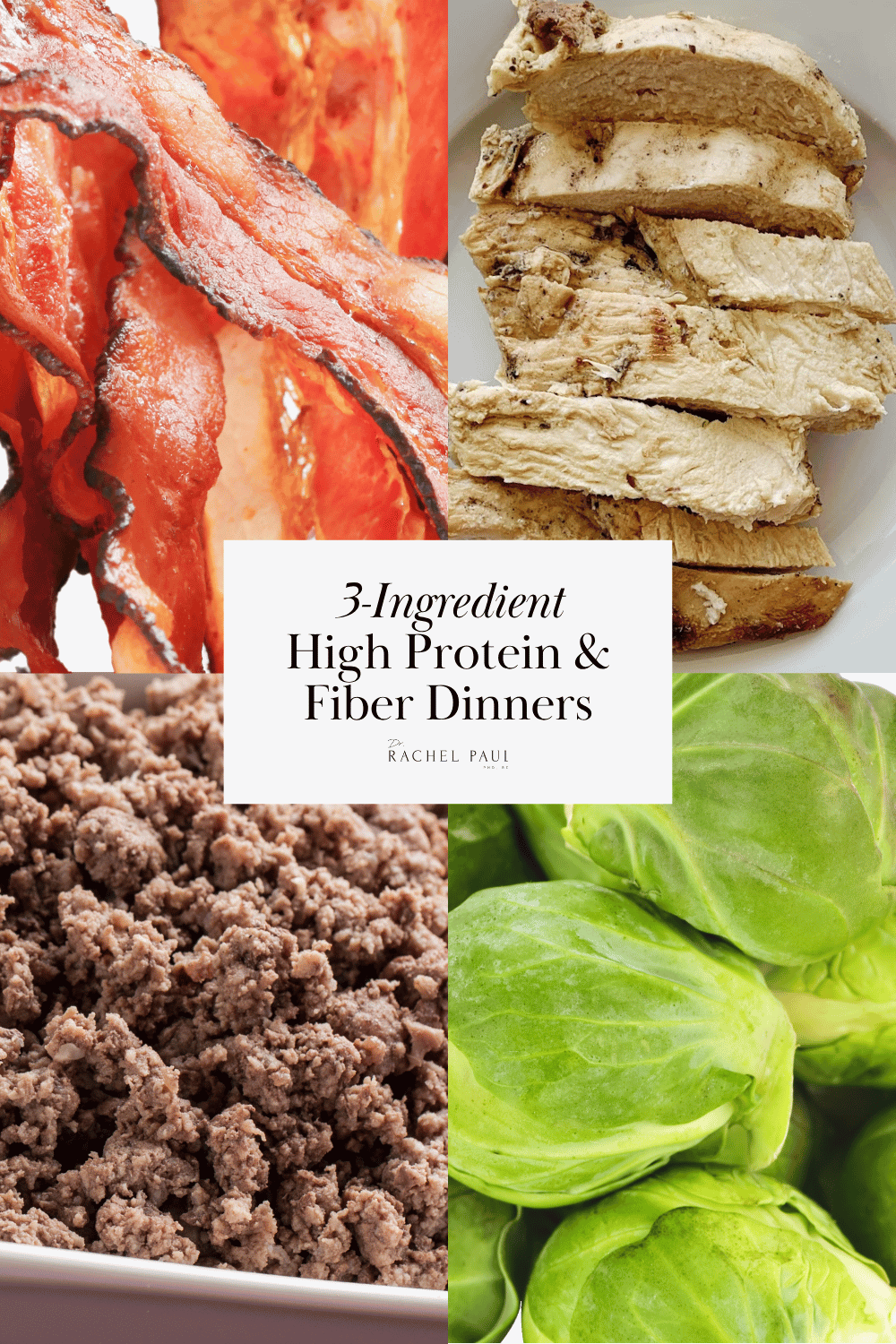
Many people struggle with consistency, not motivation. When meals feel overwhelming, it becomes harder to follow through, even with the best intentions. These high-protein & fiber dinners focus on simplicity while still supporting fullness, steady energy, and realistic portion sizes.
By keeping meals to three core components, you reduce decision fatigue and make healthy eating feel more approachable. This approach works well for busy schedules, smaller households, or anyone who wants reliable dinners without tracking every detail.
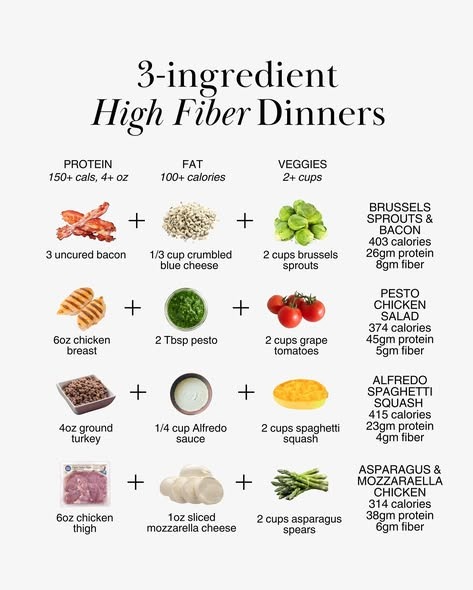
This post shows how to build balanced dinners using protein, fat, and fiber-rich vegetables, without complicated recipes or long ingredient lists.
High Protein & Fiber Dinners
Each dinner follows a simple, repeatable structure:
- A protein source to support fullness and muscle
- A fat source for flavor and satisfaction
- Vegetables to add fiber and volume
This balance helps meals feel satisfying without needing large portions or extra snacks later in the evening.
Why Fewer Ingredients Can Be More Effective
Meals with fewer ingredients are often easier to repeat, prep, and enjoy consistently. When dinners are simple, you are more likely to eat at home and less likely to default to takeout when energy is low.
Using a consistent framework also helps you learn what combinations keep you full. Over time, this builds confidence around meals rather than confusion.
How to Use These Meals in Real Life
These dinners are flexible. You can:
- Rotate proteins you enjoy
- Swap vegetables based on what is in season
- Adjust portion sizes based on hunger
They work well as:
- Quick weeknight dinners
- Meal-prepped lunches
- Simple plates when cooking for one
You do not need to cook every night or make these meals perfectly. Consistency matters more than precision.
Supporting Fullness Without Overeating
High protein helps slow digestion and supports lean muscle during weight loss. Fiber adds volume to meals and helps keep hunger more manageable between eating occasions. Together, they help meals feel more satisfying without needing extra ingredients or sauces.
If you often feel hungry shortly after dinner, increasing protein and fiber is a practical place to start.
Common Questions About Simple Dinners
Is three ingredients enough?
Yes. When meals include protein, fat, and fiber, they can be nutritionally balanced and satisfying.
Can I add seasonings?
Absolutely. Herbs, spices, salt, pepper, and lemon juice can be added freely without changing the structure.
What if I need variety?
Variety can come from rotating proteins and vegetables, not from adding more ingredients to each meal.
Why High Protein and Fiber Meals Help Weight Loss
Protein supports satiety and helps preserve muscle mass while losing weight. Fiber slows digestion and supports gut health, which can help reduce frequent hunger and grazing. Meals that include both tend to keep people fuller for longer compared to low-protein or low-fiber options.
These meals are not about restriction. They are about building plates that work with your body and your schedule.
Want More Structure and Support?
We’d love to have you join Best Body!
Inside the program, you’ll get:
- A personal, science-based weight-loss plan tailored to your lifestyle.
- 2,000+ dietitian-created recipes for fat loss, muscle maintenance, and blood sugar support.
- An interactive meal planning tool with 2,000+ meals, snacks, and desserts.
- Live weight loss coaching 2-4 times per week.
- Over 70 on-demand trainings to help you build peace around food and consistency.
Click here to join and simplify weight loss with guidance that works!