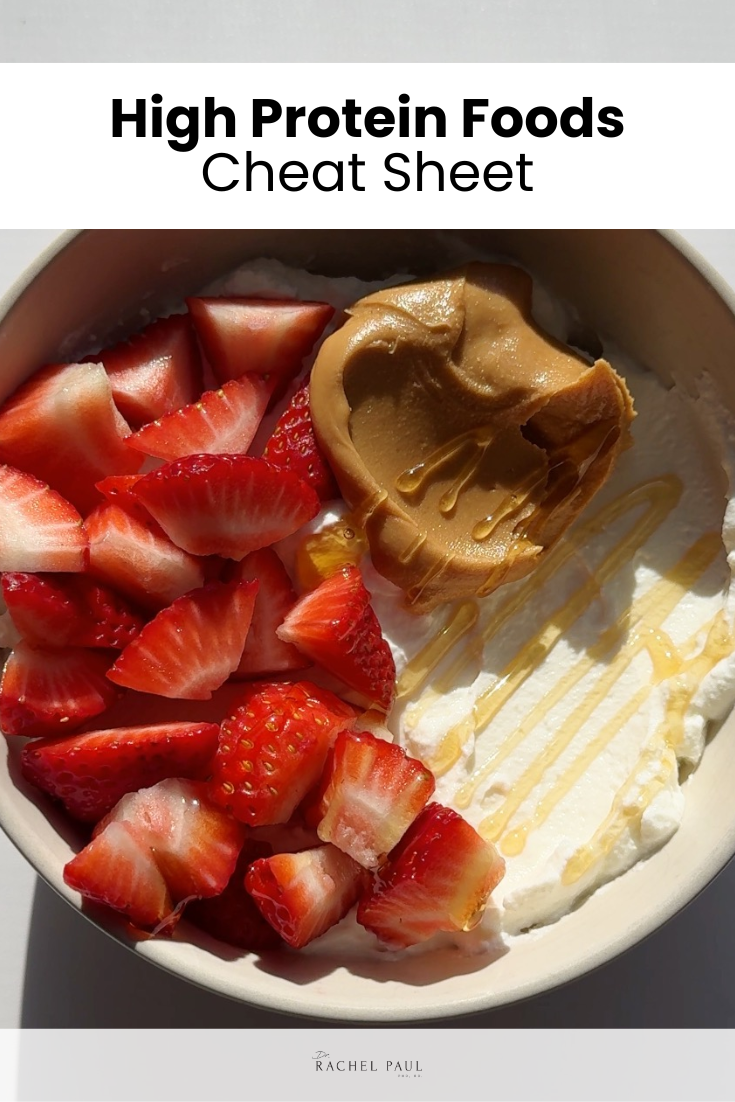
High protein foods are one of the most important tools I use with my clients when it comes to losing weight and keeping it off. Protein keeps you full, protects your muscle while you are in a calorie deficit, and helps your body function the way it should. In this post, I am sharing my complete high protein foods for weight loss cheat sheet organized by category, plus simple high protein meal ideas you can start using today.
High Protein Foods for Weight Loss: Complete Cheat Sheet
Why Protein Is So Important for Weight Loss
It Protects Your Muscle
When you are losing weight, your body burns whatever is available – body fat and muscle. Eating enough protein tells your body to protect that muscle, so the weight you lose comes primarily from fat. This is one of the first things I cover with every single client because it changes everything about how you approach eating.
It Keeps You Fuller Longer
Protein is the most satiating macronutrient. Meals built around a solid protein source keep hunger at bay between meals, which makes staying consistent so much easier. If you are constantly hungry on your plan, protein is usually the first thing I look at.
How Much Do You Need?
A good general target is 0.7 to 1 gram of protein per pound of body weight per day. In practical meal terms, I recommend aiming for at least 4 oz of protein at every meal. I always encourage getting that protein from whole, real foods rather than bars or powders – whole foods give you protein plus the vitamins, minerals, and fats your body needs to function optimally.
The High Protein Foods Cheat Sheet
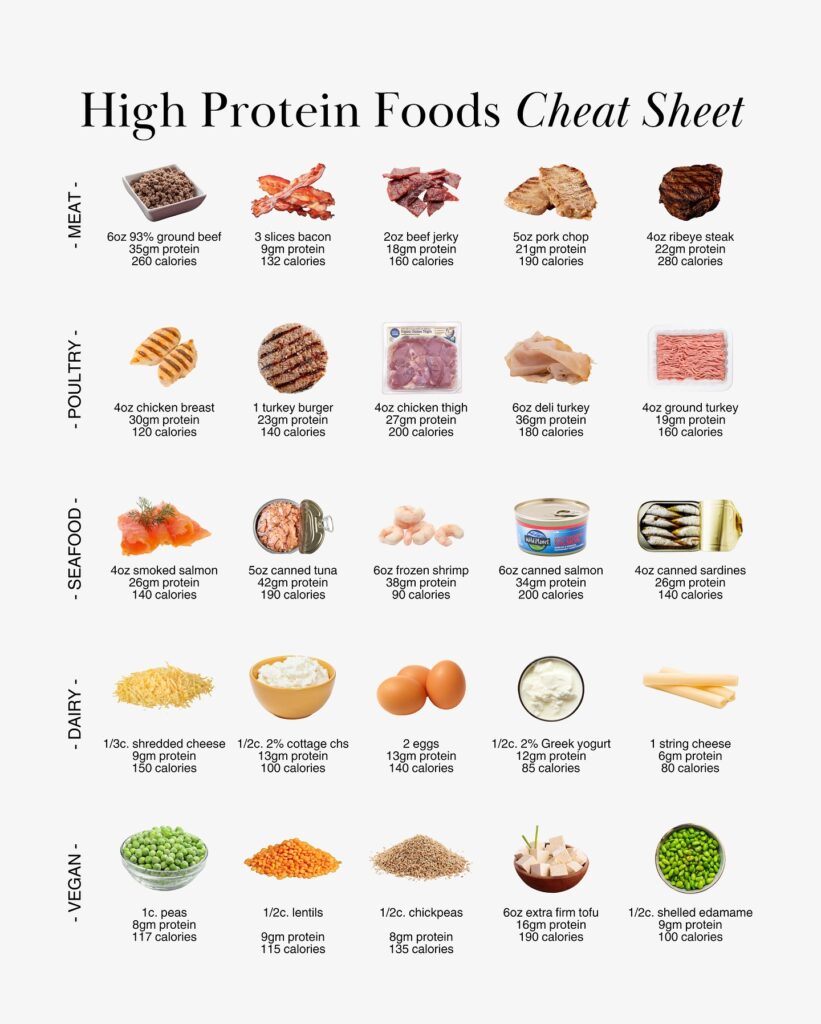
Here is the full cheat sheet I share with my clients. Use it to build your meals, plan your grocery list, or simply understand which foods are giving you the most protein per serving.
Meat
Meat is one of the most efficient protein sources available. My top picks:
- 6 oz 93% ground beef – 35g protein, 260 calories
- 3 slices bacon – 9g protein, 132 calories
- 2 oz beef jerky – 18g protein, 160 calories
- 5 oz pork chop – 21g protein, 190 calories
- 4 oz ribeye steak – 22g protein, 280 calories
Poultry
Poultry is one of the most versatile and affordable protein categories. These are staples in my clients’ meal plans:
- 4 oz chicken breast – 30g protein, 120 calories
- 1 turkey burger – 23g protein, 140 calories
- 4 oz chicken thigh – 27g protein, 200 calories
- 6 oz deli turkey – 36g protein, 180 calories
- 4 oz ground turkey – 19g protein, 160 calories
Deli turkey and chicken breast are two of the highest protein-per-calorie options on this entire list. They are easy to keep on hand and work in almost any meal.
Seafood
Seafood is something I encourage my clients to eat more of. It is high in protein, relatively low in calories, and incredibly quick to prepare:
- 4 oz smoked salmon – 26g protein, 140 calories
- 5 oz canned tuna – 42g protein, 190 calories
- 6 oz frozen shrimp – 38g protein, 90 calories
- 6 oz canned salmon – 34g protein, 200 calories
- 4 oz canned sardines – 26g protein, 140 calories
Canned tuna and frozen shrimp are two of my absolute favorites to recommend because they are affordable, quick, and deliver serious protein for very few calories.
Dairy
Dairy options are great for snacks and breakfast. Here is what I recommend most often:
- 1/3 cup shredded cheese – 9g protein, 150 calories
- 1/2 cup 2% cottage cheese – 13g protein, 100 calories
- 2 eggs – 13g protein, 140 calories
- 1/2 cup 2% Greek yogurt – 12g protein, 85 calories
- 1 string cheese – 6g protein, 80 calories
Cottage cheese and Greek yogurt are two I come back to constantly with clients. Both are easy to grab, require zero prep, and pair well with fruit for a quick high protein snack.
Vegan Protein Sources
If you eat plant-based or just want more variety, these are the options I recommend:
- 1 cup peas – 8g protein, 117 calories
- 1/2 cup lentils – 9g protein, 115 calories
- 1/2 cup chickpeas – 8g protein, 135 calories
- 6 oz extra firm tofu – 16g protein, 190 calories
- 1/2 cup shelled edamame – 9g protein, 100 calories
Tofu and edamame are the standouts here for protein content. Lentils and chickpeas are also great because they add fiber alongside the protein.
Simple High Protein Recipes for Weight Loss
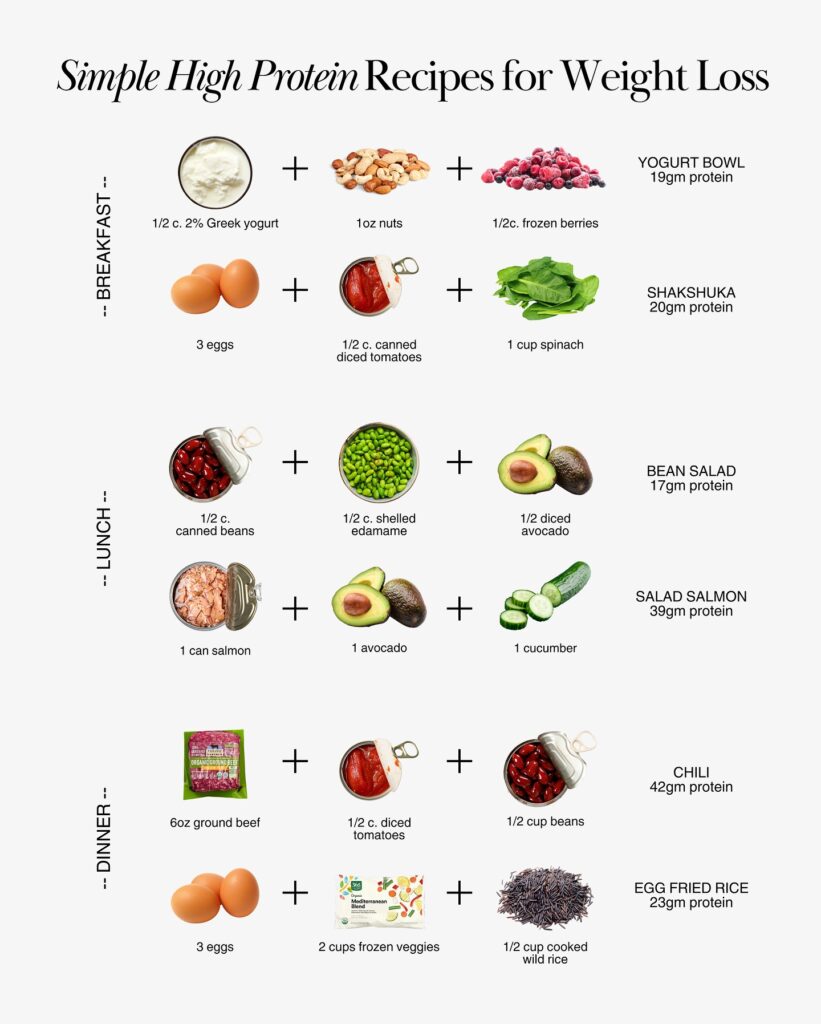
Knowing which foods are high in protein is one thing. Putting them together into actual meals is another. Here are some simple combinations I love sharing with my clients – no complicated recipes required.
High Protein Breakfast Ideas
- Yogurt bowl: 1/2 cup 2% Greek yogurt + 1 oz nuts + 1/2 cup frozen berries – 19g protein
- Shakshuka: 3 eggs + 1/2 cup canned diced tomatoes + 1 cup spinach – 20g protein
High Protein Lunch Ideas
- Bean salad: 1/2 cup canned beans + 1/2 cup shelled edamame + 1/2 diced avocado – 17g protein
- Salad salmon: 1 can salmon + 1 avocado + 1 cucumber – 39g protein
High Protein Dinner Ideas
- Chili: 6 oz ground beef + 1/2 cup diced tomatoes + 1/2 cup beans – 42g protein
- Egg fried rice: 3 eggs + 2 cups frozen veggies + 1/2 cup cooked wild rice – 23g protein
These meals are simple on purpose. My clients are busy. The goal is real food that comes together fast and actually fills you up.
How to Use This Cheat Sheet
I recommend saving this post and pulling it out when you are meal planning or grocery shopping. Pick one or two proteins from each category that sound good to you and build your week around those. You do not need to eat every food on this list – you just need to find the ones that work for your life and rotate through them consistently.
If you want a fully built-out meal plan that does all of this for you – with your specific calorie and protein targets already calculated – that is exactly what we do inside Best Body. Thousands of women have used this approach to lose weight and actually keep it off. Learn more and join us here.
Not ready for that yet? Start with my free resources at DrRachelPaul.com/free-downloads – including my meal formula cheat sheet that shows you exactly how to build a high protein meal from scratch.
Frequently Asked Questions About High Protein Foods
What is the highest protein food for weight loss?
From this cheat sheet, canned tuna tops the list at 42g of protein for just 190 calories. Frozen shrimp and canned salmon are also close behind. If you are looking for the most protein per calorie, seafood and lean poultry are your best options.
How much protein should I eat per meal?
I tell my clients to aim for at least 4 oz of a whole food protein source per meal, which typically lands between 20 and 35 grams of protein depending on what you choose. Hitting that target consistently across three meals goes a long way toward reaching your daily protein goal.
Are protein bars a good source of protein?
I always prefer whole food sources first. Protein bars can fill a gap in a pinch, but they are not a substitute for real food. Whole foods give you protein along with nutrients that bars simply cannot replicate. Use them as a backup, not a staple.
Can eating more protein help me lose weight faster?
It supports weight loss in a meaningful way, but not by speeding up the process directly. What it does is help you stay fuller longer, protect your muscle while you are in a calorie deficit, and make it easier to stay consistent with your calorie goals. That consistency is what actually produces results over time.
What are easy high protein foods to keep on hand?
The ones I recommend stocking regularly are canned tuna, canned salmon, Greek yogurt, cottage cheese, eggs, deli turkey, frozen shrimp, and also edamame. All of these require little to no prep and make it easy to hit your protein target at any meal.
Final Thoughts on High Protein Foods for Weight Loss
Protein is not complicated – but it does require being intentional. Use this cheat sheet to make sure you are including a solid protein source at every meal, choose whole foods whenever possible, and aim for at least 4 oz per meal as a starting point.
Small, consistent changes to your protein intake can make a real difference in how full you feel, how much muscle you protect, and how sustainable your weight loss actually is.
Save this post, bookmark the cheat sheet, and start building your meals around it.
And when you are ready for a personalized plan that puts all of this together for you, we would love to have you inside Best Body. Join us here!