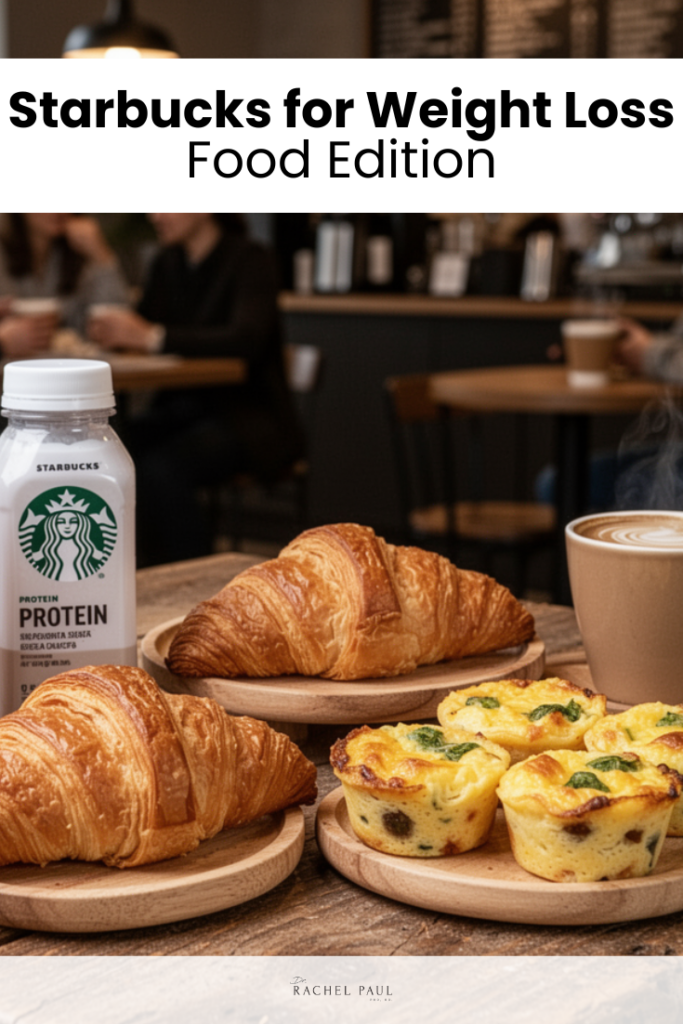
Weight loss is not about perfection, strict rules, or cutting out entire food groups. It’s about building habits that naturally support a calorie deficit while helping you feel full, energized, and consistent. Many people struggle with weight loss because they rely on short-term motivation rather than on repeatable habits. This guide walks through simple, realistic practices that support fat loss without requiring complicated meal plans or hours in the gym.
If you are busy, tired of starting over, or want a sustainable approach that fits real life, these habits focus on what actually works long term: prioritizing real foods, moving regularly, and removing the feeling of restriction that often leads to burnout.
Weight Loss can be Effortless and Achievable
When daily habits support hunger control, energy levels, and satisfaction, weight loss becomes easier to maintain. You can absolutely lose weight in any calorie deficit, but the habits below are what consistently help people stay in that deficit without feeling deprived.
Prioritize Protein
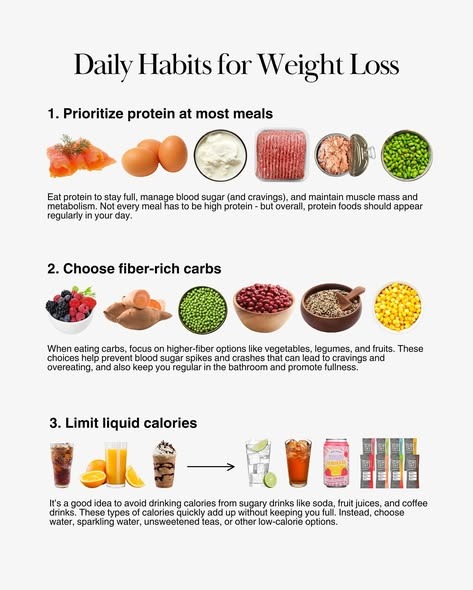
Protein helps manage hunger, stabilize blood sugar, and maintain muscle mass during weight loss. Eating protein regularly can reduce cravings and improve fullness after meals.
Simple protein options
- Greek yogurt (150 calories, 15-20g protein per 3/4 cup)
- Eggs (70 calories each, 6g protein)
- Cottage cheese (110 calories, 13g protein per 1/2 cup)
- Chicken breast (140 calories, 26g protein per 3 oz)
- Salmon (180 calories, 22g protein per 3 oz)
Tip: Aim to include protein at most meals, not just dinner.
Choose Fiber-Rich Carbs
Carbohydrates are not the problem. Low-fiber carbs often digest quickly and leave you hungry soon after eating. Fiber slows digestion and improves fullness.
Fiber-rich carb choices
- Berries (70 calories per cup)
- Sweet potatoes (100 calories per medium potato)
- Beans or lentils (120 calories per 1/2 cup)
- Oats (150 calories per 1/2 cup dry)
- Vegetables like broccoli or peas (50-80 calories per cup)
Tip: Pair fiber carbs with protein for longer-lasting energy.
Limit Liquid Calories
Liquid calories add up quickly and often do not provide a sense of fullness. Reducing sugary beverages is one of the easiest ways to lower daily calorie intake.
Lower-calorie drink swaps
- Water or sparkling water (0 calories)
- Unsweetened iced tea (0 calories)
- Black coffee or coffee with a splash of milk (10-40 calories)
- Diet or zero-sugar beverages (0-10 calories)
Tip: Keep enjoyable drinks, just make them intentional rather than automatic.
Plan Your Meals
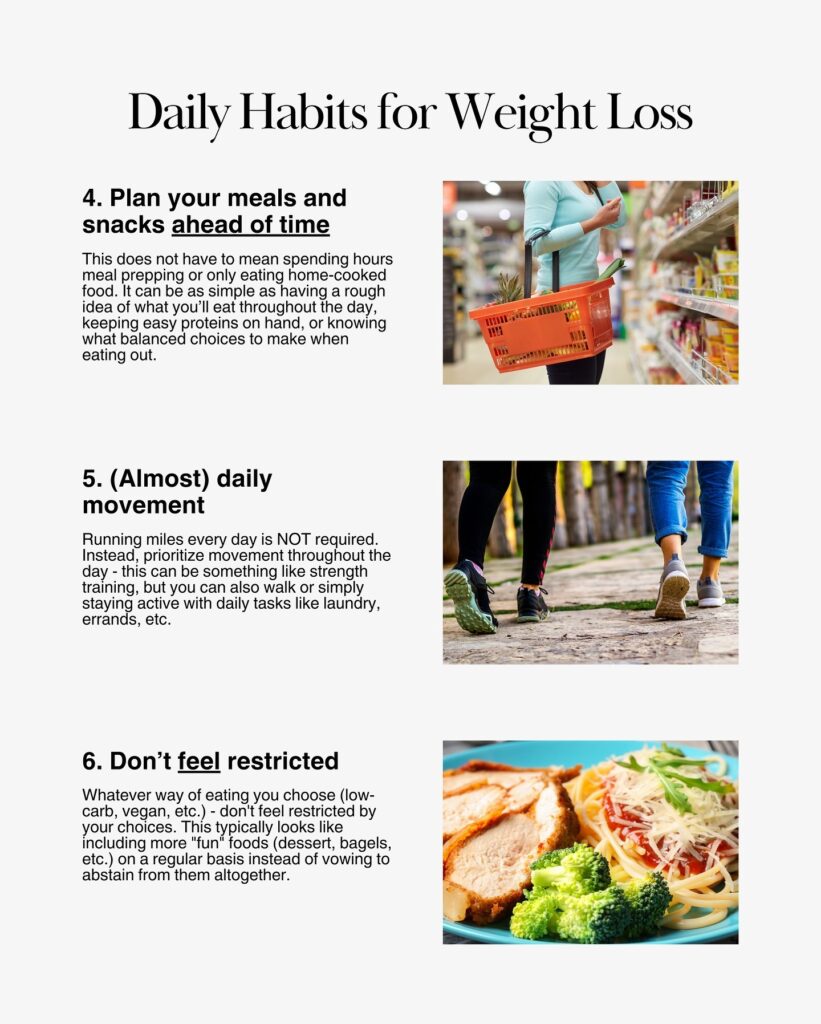
Planning does not mean strict meal prep. It simply means reducing decision fatigue, making balanced choices easier on busy days.
Easy planning strategies
- Keep ready-to-eat proteins available
- Decide on meals the night before
- Identify go-to restaurant orders
- Build meals around protein first
Example balanced meal
- Grilled chicken salad with vegetables and dressing (350-450 calories)
- Turkey sandwich with fruit (400 calories)
Move Daily
Exercise does not need to be intense to support weight loss. Consistent movement improves energy expenditure, mood, and overall health.
Simple movement ideas
- 20-30 minute walk (100-150 calories burned depending on pace)
- Strength training 2-3 times weekly
- Household activities like cleaning or yard work
- Taking stairs or parking farther away
Tip: Think consistency, not intensity.
Don’t Feel Restricted
Feeling restricted often leads to overeating later. Including enjoyable foods regularly helps create consistency and reduces the cycle of starting and stopping diets.
Balanced approach examples
- Add dessert intentionally instead of banning it
- Include favorite carbs in portions that satisfy
- Build meals you actually enjoy eating
A sustainable plan includes flexibility, not perfection.
Why do these Habits Work?
Weight loss ultimately comes down to energy balance, but biology and behavior matter. Protein and fiber improve satiety hormones, helping you naturally eat fewer calories. Planning reduces impulsive decisions driven by hunger. Movement increases daily energy expenditure without requiring extreme workouts. Most importantly, removing restrictions reduces the psychological rebound that causes many diets to fail.
These habits work together to make consistency easier, which is the true driver of long-term results.
Make Weight Loss Feel Easier, Not Harder
Effortless weight loss is not about doing everything perfectly. It is about repeating small habits that support your goals day after day. Prioritize protein, choose fiber-rich foods, limit liquid calories, plan meals, move regularly, and allow flexibility. These tools help weight loss feel realistic and maintainable for real life.
Get my free Beginner’s Guide to Weight Loss here!
Want more resources and tips? Join Best Body Today!
Here’s a breakdown of Best Body:
- Personal Weight-Loss Plan tailored to your lifestyle
- Dietitian-Created Recipes supporting fat loss and blood sugar balance
- Easy Meal Planning with 2000+ meals and snacks
- Weight Loss Coaching with weekly group support
- Learn Peace Around Food with 70+ on-demand trainings