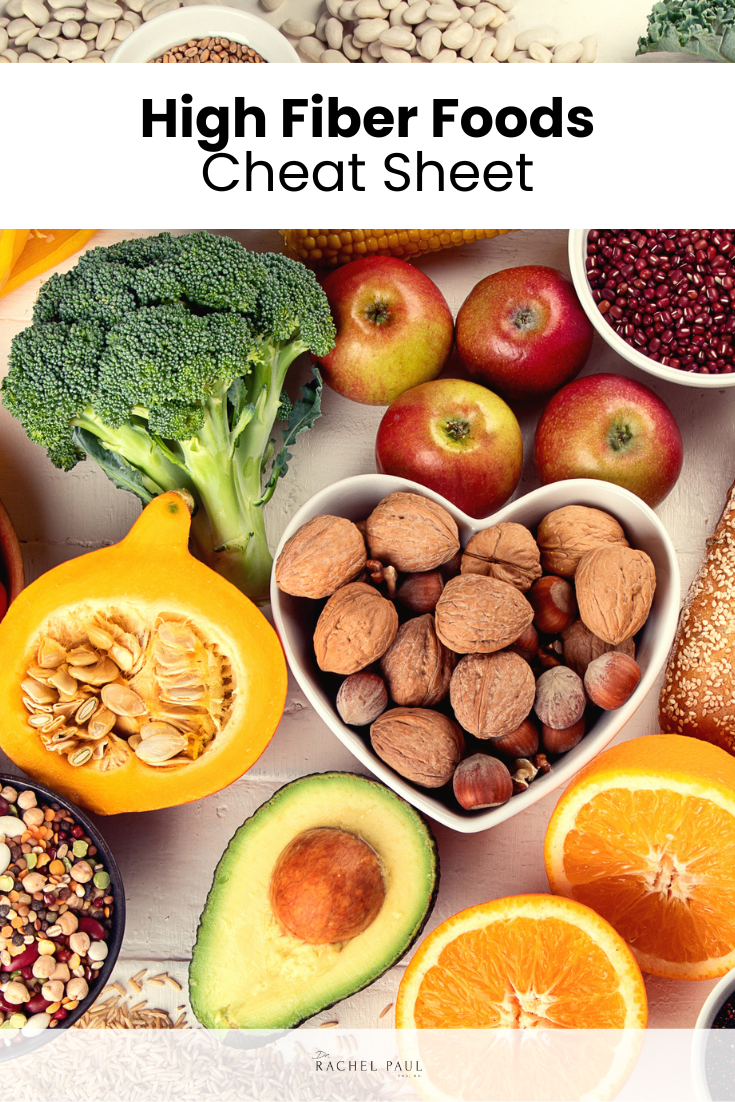
High fiber foods are one of the most underrated tools for weight loss – and in Best Body, I talk about them constantly. If you are eating enough fiber, you feel fuller longer, your digestion stays on track, and cravings become a lot easier to manage. In this post, I am sharing my complete high fiber foods cheat sheet so you know exactly what to eat and how much.
The Complete High Fiber Foods Cheat Sheet
Why Fiber Matters for Weight Loss
It Keeps You Full
Fiber slows digestion. That means the food you eat stays in your stomach longer, which keeps hunger signals at bay between meals. This is one of the reasons I always encourage my members to build meals and snacks around high fiber options – it makes staying consistent so much easier.
It Supports a Healthy Gut
Fiber feeds the good bacteria in your gut, which plays a bigger role in your overall health than most people realize. Better digestion, less bloating, more stable energy. It all connects.
How Much Do You Actually Need?
The general recommendation is 25 grams per day for women and 38 grams per day for men. Most people are getting far less than that. The good news is that once you know which foods are highest in fiber, hitting that goal gets a lot simpler.
The Highest Fiber Foods by Category
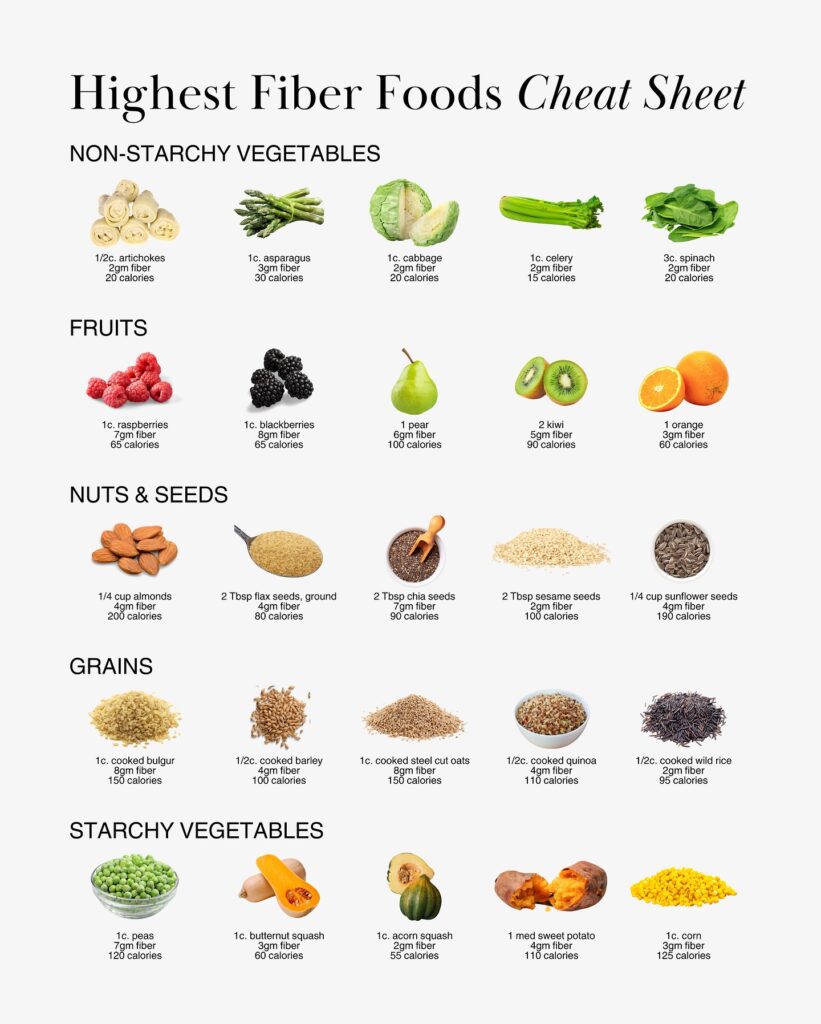
This is the cheat sheet I share with my members. Use it to add fiber to your meals without overthinking it.
Non-Starchy Vegetables
These are fantastic choices because they give you fiber AND volume for very few calories. My top picks:
- 1/2 cup artichokes – 2g fiber, 20 calories
- 1 cup asparagus – 3g fiber, 30 calories
- 1 cup cabbage – 2g fiber, 20 calories
- 1 cup celery – 2g fiber, 15 calories
- 3 cups spinach – 2g fiber, 20 calories
Fruits
Fruit is one of the easiest ways to boost your fiber intake. These are the ones I recommend most:
- 1 cup raspberries – 7g fiber, 65 calories
- 1 cup blackberries – 8g fiber, 65 calories
- 1 pear – 6g fiber, 100 calories
- 2 kiwi – 5g fiber, 90 calories
- 1 orange – 3g fiber, 60 calories
Raspberries and blackberries are especially impressive. A full cup of either gives you more fiber than most people think to look for in a fruit.
Nuts and Seeds
A little goes a long way here. These are calorie-dense, so I recommend keeping portions in check – but the fiber payoff is real:
- 1/4 cup almonds – 4g fiber, 200 calories
- 2 tablespoons ground flax seeds – 4g fiber, 80 calories
- 2 tablespoons chia seeds – 7g fiber, 90 calories
- 2 tablespoons sesame seeds – 2g fiber, 100 calories
- 1/4 cup sunflower seeds – 4g fiber, 190 calories
Chia seeds are one of my favorites to recommend because you can add them to yogurt, oatmeal, or a smoothie without changing the flavor much at all.
Grains
When you include a starch in your meal, choosing a high fiber grain is a smart move:
- 1 cup cooked bulgur – 8g fiber, 150 calories
- 1/2 cup cooked barley – 4g fiber, 100 calories
- 1 cup cooked steel cut oats – 8g fiber, 150 calories
- 1/2 cup cooked quinoa – 4g fiber, 110 calories
- 1/2 cup cooked wild rice – 2g fiber, 95 calories
Steel cut oats and bulgur are standouts here. Both are filling, versatile, and easy to meal prep ahead of time.
Starchy Vegetables
These are optional at meals – about 100 calories per serving – and several of them are excellent fiber sources:
- 1 cup peas – 7g fiber, 120 calories
- 1 cup butternut squash – 3g fiber, 60 calories
- 1 cup acorn squash – 2g fiber, 55 calories
- 1 medium sweet potato – 4g fiber, 110 calories
- 1 cup corn – 3g fiber, 125 calories
Peas in particular are one I love recommending because people forget how much fiber they pack. Add them to anything.
Simple High Fiber Snack Ideas
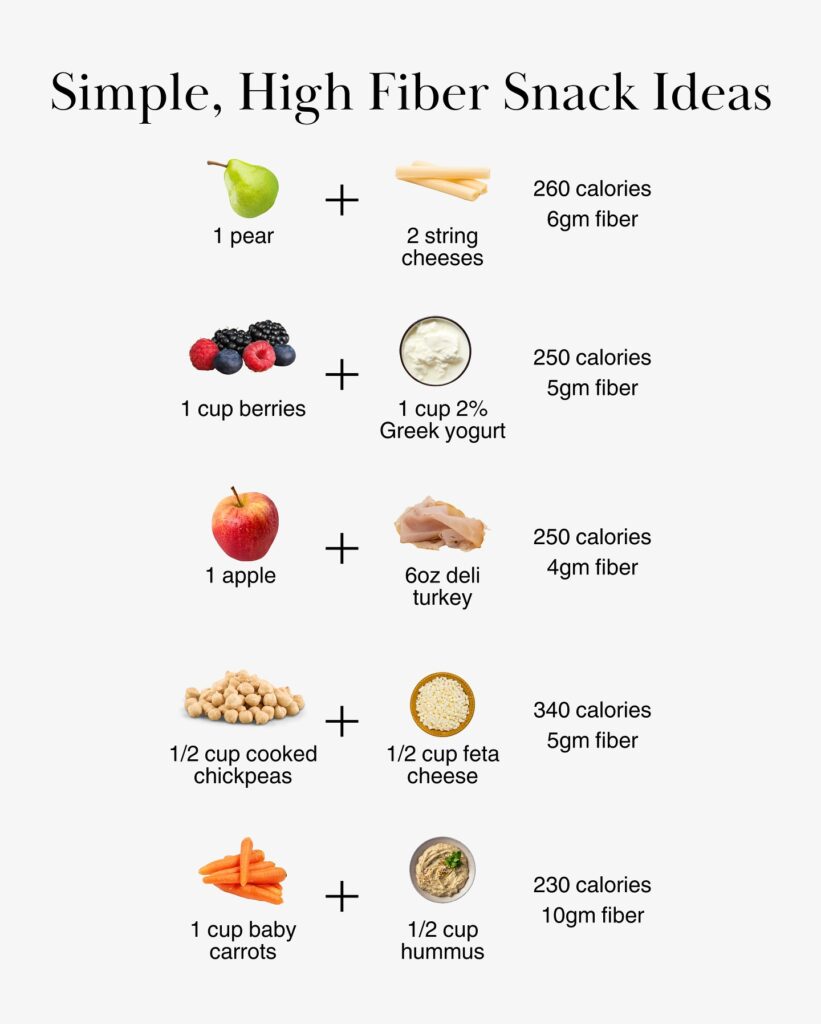
Snacks are one of the easiest places to add fiber to your day without any extra effort. Here are five combinations I love and share with my members regularly. Each one pairs a fiber source with a protein to keep you full between meals:
- 1 pear + 2 string cheeses – 260 calories, 6g fiber
- 1 cup berries + 1 cup 2% Greek yogurt – 250 calories, 5g fiber
- 1 apple + 6 oz deli turkey – 250 calories, 4g fiber
- 1/2 cup cooked chickpeas + 1/2 cup feta cheese – 340 calories, 5g fiber
- 1 cup baby carrots + 1/2 cup hummus – 230 calories, 10g fiber
That last one is a personal favorite. Baby carrots and hummus is simple, satisfying, and gives you 10 grams of fiber in one snack.
For more options, check out these 25 high fiber snack ideas.
How to Use This Cheat Sheet
The goal is not to overhaul everything at once. I tell my Best Body members to start by adding one high fiber food to each meal and one fiber-rich snack per day. That alone can get most people close to their daily fiber goal without feeling like a big change.
From there, it becomes habit. You stop thinking about it and it just becomes how you eat.
If you want a more structured approach to building meals that hit your fiber, protein, and calorie goals all at once, that is exactly what we do inside my Best Body program. It takes the guesswork out completely. You can learn more and join us at DrRachelPaul.com.
Frequently Asked Questions About High Fiber Foods
How much fiber do I need per day?
The general recommendation is 25 grams per day for women and 38 grams per day for men. Most people are falling short of that. Using this cheat sheet to add high fiber foods at each meal and snack is the simplest way I know to close that gap consistently.
What is the highest fiber food I can eat?
From the categories I covered, chia seeds, steel cut oats, bulgur, blackberries, raspberries, and peas are all standout choices. If I had to pick one food to add to your day right now, I would say chia seeds – they are easy to add to almost anything and deliver 7 grams of fiber in just 2 tablespoons.
Can eating more fiber help me lose weight?
Yes – and I see this with my members all the time. Fiber slows digestion, which keeps you fuller for longer. When you are not constantly hungry, it is much easier to stay within your calorie goals. Fiber is not a magic fix, but it is a genuinely powerful tool for making weight loss feel more sustainable.
Should I take a fiber supplement instead?
I always prefer whole food sources first. The foods on this cheat sheet give you fiber along with vitamins, minerals, and other nutrients that a supplement simply cannot replicate. That said, if you are really struggling to hit your fiber goals through food alone, a supplement can help fill the gap. Just do not use it as a substitute for eating well.
Will eating more fiber cause bloating?
It can, especially if you increase your intake too quickly. My recommendation is to add fiber gradually over a few weeks and make sure you are drinking enough water throughout the day. Fiber needs water to move through your digestive system properly. Go slow and your body will adjust.
Final Thoughts on High Fiber Foods for Weight Loss
Fiber is one of the simplest, most effective tools I recommend for feeling full, staying consistent, and losing weight without feeling deprived. The foods on this cheat sheet are real, whole foods that are easy to find and easy to work into your day.
Save this post, bookmark the cheat sheet, and start adding one or two of these foods to your next meal.
And if you are ready for a full plan that puts all of this together for you – fiber, protein, calories, and meal structure – I would love to have you inside Best Body. Join us here!
Download my FREE Fiber guide here!