If you are trying to lose weight and boost your metabolism, it can feel frustrating when progress is slower than expected. Many people assume their metabolism is damaged or broken, especially if dieting has not worked in the past. In reality, metabolism is highly adaptive. It responds to how much you eat, how you move, how stressed you are, and how consistently you fuel your body.
This post explains how to support your metabolism while losing weight, instead of working against it. These strategies are not extreme. They are realistic, science-backed tools that help your body feel safe enough to release weight over time.
Easy Steps to Support Your Metabolism
Be in a Small Calorie Deficit

Weight loss requires a calorie deficit, but the size of that deficit matters. When calories are cut too aggressively, the body perceives a threat. In response, it conserves energy by slowing metabolic processes, increasing fatigue, and amplifying hunger signals.
A small calorie deficit allows weight loss to occur without triggering these protective responses. This approach supports steadier energy levels, better digestion, and improved adherence over time. Many people find that slower weight loss feels less stressful and is easier to maintain.
It is also important to move away from rigid eating rules. Eating when you are hungry and stopping when you are satisfied helps reinforce trust with your body. That trust plays a larger role in long-term success than willpower alone.
Use the Thermic Effect of Food

The Thermic Effect of Food (TEF) refers to the calories your body burns while digesting and metabolizing food. Protein requires the most energy to process, followed by carbohydrates, then fat.
This does not mean you should eliminate fat or carbs. Fat is essential for hormone health, and carbohydrates fuel both physical activity and daily brain function. The key takeaway is that prioritizing protein- and fiber-rich foods can slightly increase daily energy expenditure while improving feelings of fullness.
Fiber-rich carbohydrates, such as vegetables, fruits, beans, and whole grains, also slow digestion and reduce blood sugar spikes. This helps stabilize energy and reduce cravings later in the day. Over time, this stability supports more consistent eating patterns, which are critical for metabolic health.
Create Meals With Protein, Fat, & Fiber
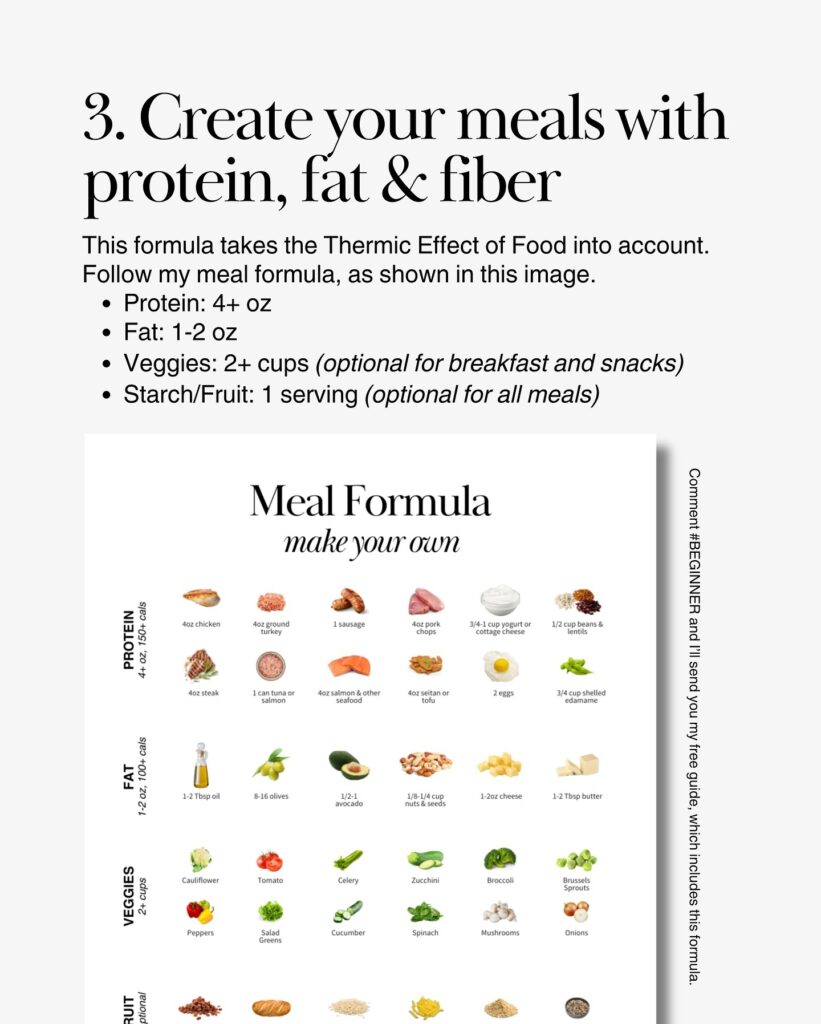
Balanced meals are foundational for supporting metabolism during weight loss. When meals lack structure, hunger often returns quickly, leading to grazing or overeating later.
Meals built around protein, fat, and fiber help regulate appetite hormones and promote longer-lasting satisfaction. Protein supports muscle mass and metabolic rate. Fat contributes to satiety and nutrient absorption. Fiber slows digestion and supports gut health.
You do not need to hit exact numbers at every meal. Think of this as a flexible framework rather than a strict rule. Even small improvements, such as adding protein to breakfast or increasing vegetables at dinner, can make a meaningful difference.
Consistency matters more than perfection.
How This Looks in Real Life
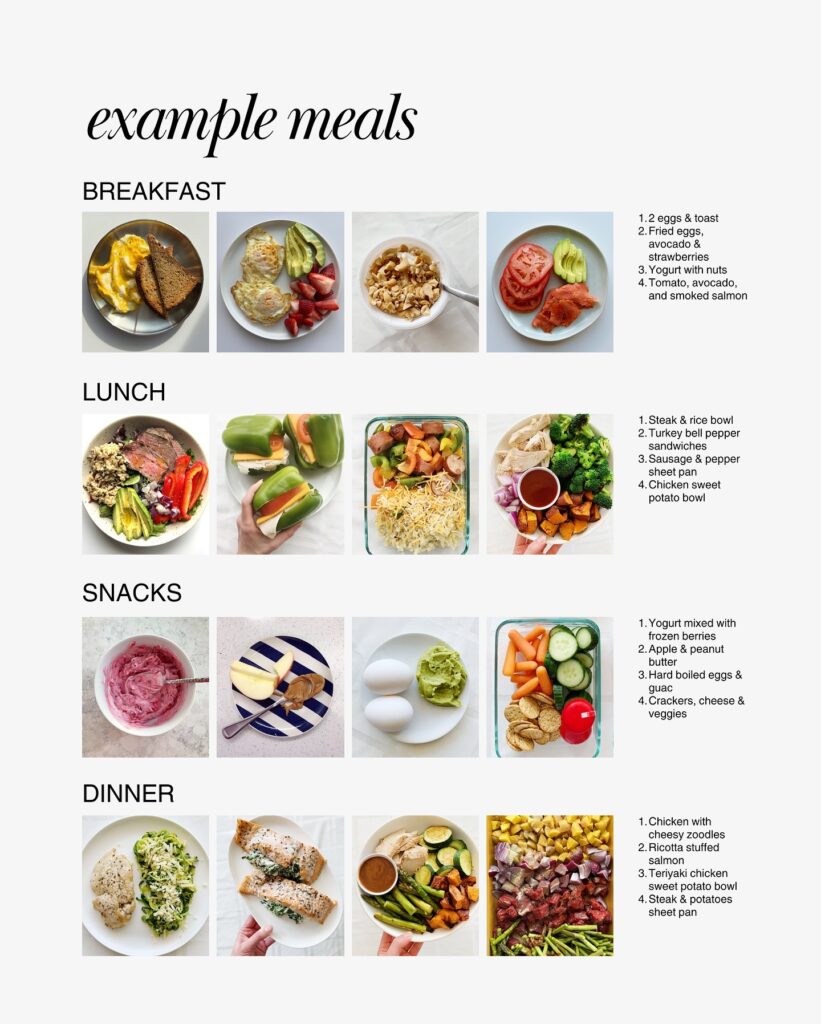
Many people worry that “balanced eating” will feel restrictive or complicated. In reality, it often creates more freedom. When meals are satisfying, you spend less mental energy thinking about food.
Balanced meals can be mixed and matched based on preferences, culture, and schedule. There is no single “correct” combination. What matters is that meals support fullness, energy, and consistency throughout the day.
If your schedule is busy, simple meals are still effective. Convenience foods can fit, as long as they contribute protein, fiber, or healthy fats. This flexibility helps make weight loss sustainable in the long term.
Do Resistance Exercise the Smart Way
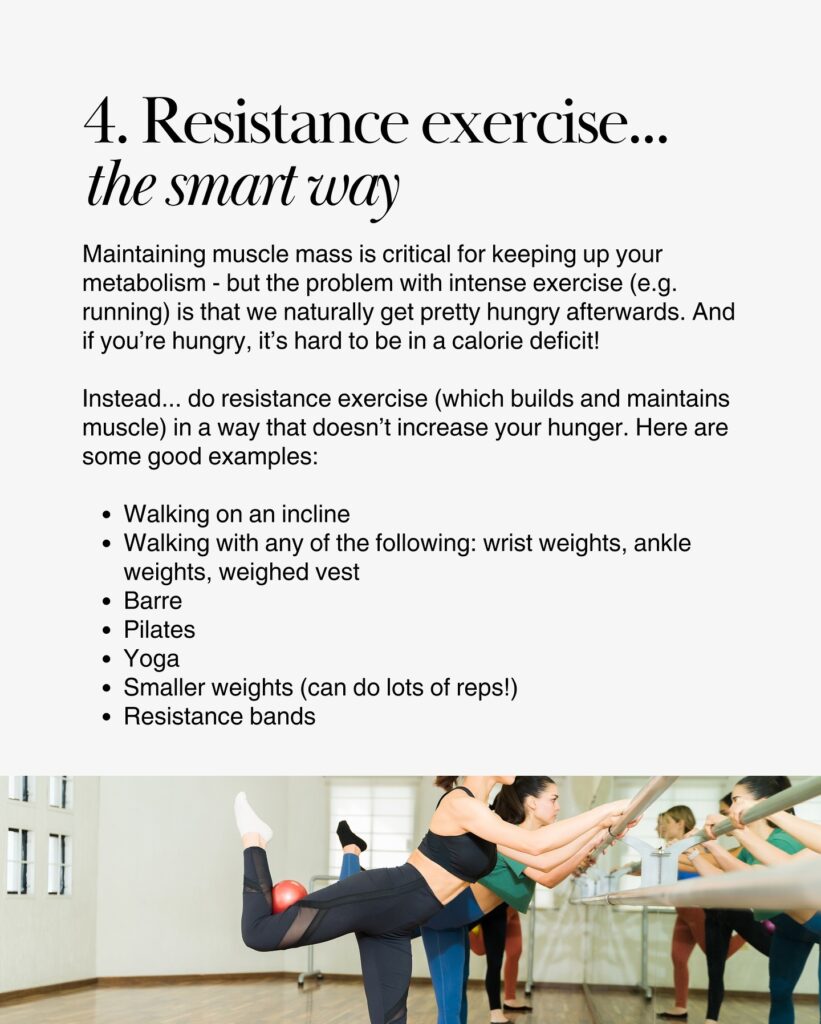
Muscle mass plays a major role in metabolic health. Maintaining muscle helps preserve resting energy expenditure during weight loss. However, the type of movement you choose matters.
High-intensity exercise can significantly increase hunger for some people, making it harder to maintain a calorie deficit. That does not mean intense workouts are bad. It means they may not be the best tool for everyone when it comes to weight loss.
Resistance-focused movement builds and maintains muscle without overstimulating appetite for many individuals. These forms of exercise also tend to be easier to recover from, which supports consistency.
Movement should enhance your life, not drain it. Choosing an exercise that feels manageable and repeatable is often more effective than pushing through extremes.
Your Metabolism Isn’t Broken, It Just Needs Support
If weight loss has felt like a constant uphill battle, it is understandable to feel discouraged. But difficulty losing weight does not mean your body is failing you. More often, it means your body is responding appropriately to stress, under-fueling, or inconsistency.
Supporting your metabolism involves:
- Eating enough to signal safety
- Prioritizing protein and fiber
- Creating meals that satisfy
- Choosing movement that supports appetite regulation
These strategies are designed to work with your body. Progress may feel slower at first, but it is often more sustainable and less mentally exhausting.
Best Body Meal Plan
If you want help putting these principles into practice without overthinking meals, get a free balanced meal plan here!