If you want to lose weight without losing muscle, your approach matters more than your motivation. Many people start a weight loss plan to get leaner, but end up feeling weaker, more tired, and constantly hungry. That usually happens when the body is losing both fat and muscle, rather than primarily fat.
Here’s the truth: your body does not automatically protect muscle during weight loss. It responds to how you eat, how much you eat, and how you move. When those pieces are aligned, you can lose body fat while maintaining strength, energy, and a healthy metabolism.
This guide will show you how to lose weight without losing muscle using realistic, science-backed strategies. You do not need extremes. You need consistency, structure, and enough fuel to support your body.
How to Lose Weight Without Losing Muscle
Prioritize Protein
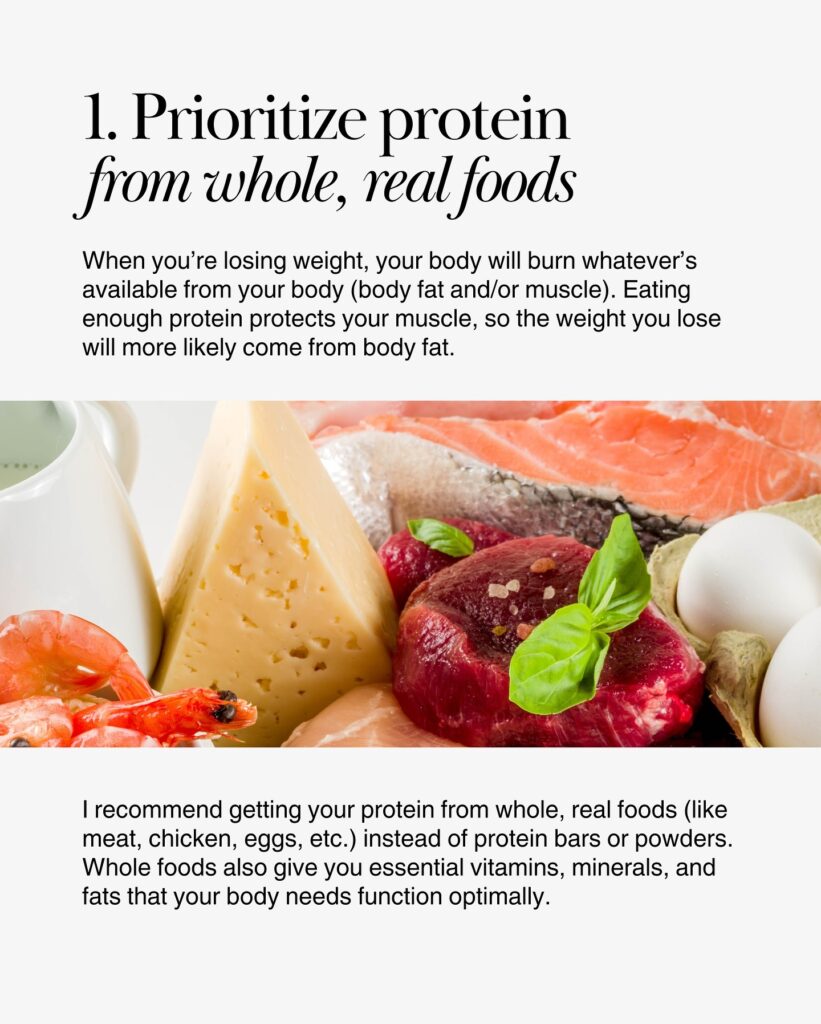
Protein is the most important nutrient for maintaining muscle during weight loss. When calorie intake is reduced, your body looks for alternative energy sources. Without enough protein, it may break down muscle tissue to meet those needs.
Aim for about 20-30 grams of protein per meal, or roughly 0.7-1.0 grams per pound of goal body weight per day for active individuals.
Examples:
- 2 eggs + egg whites – ~180 calories, 18-22g protein
- Greek yogurt (3/4 cup) – ~120 calories, 15-18g protein
- Chicken breast (4 oz) – ~180 calories, 30-35g protein
- Lean ground turkey (4 oz) – ~170 calories, 28g protein
- Salmon (4 oz) – ~200 calories, 25g protein
Helpful tips:
- Start your day with protein to reduce cravings later
- Pair protein with fiber (like veggies or fruit) for better fullness
- If you struggle to hit protein goals, build meals around it first
Why it works:
Protein increases satiety, meaning you stay full longer. It also has a higher thermic effect, so your body uses more energy to digest it than it does with carbs and fats.
Use the Meal Formula
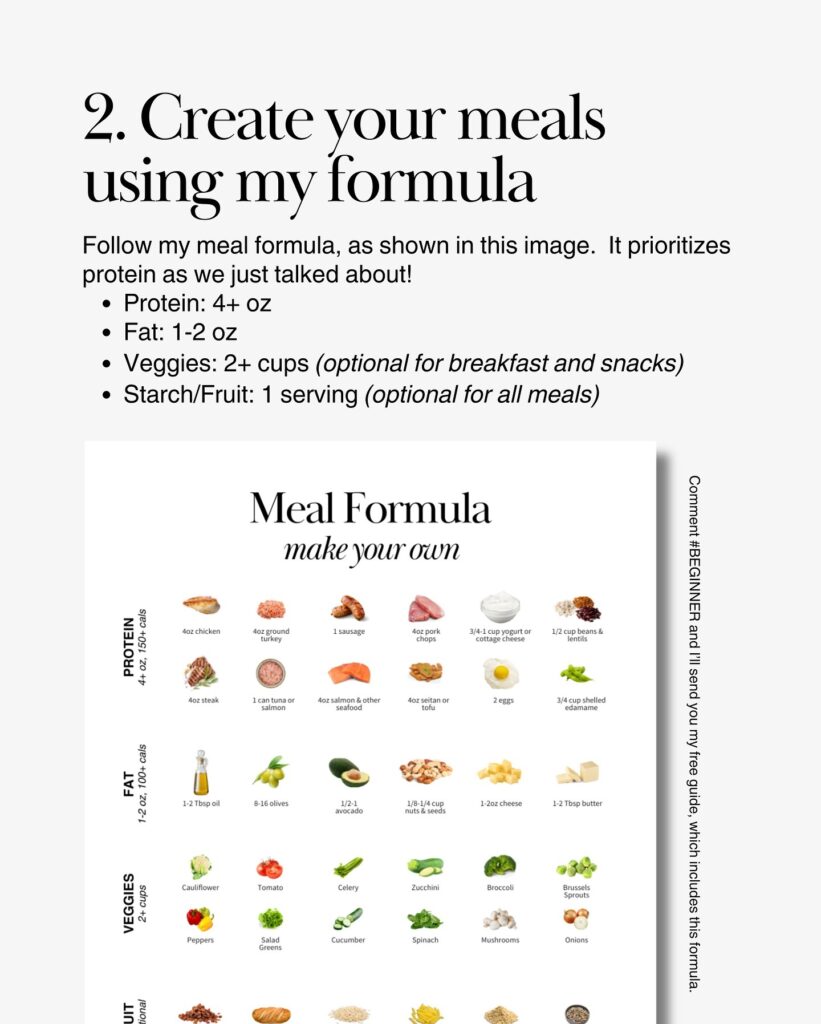
Instead of guessing or relying on willpower, use a simple structure that keeps meals balanced and satisfying.
Meal Formula:
- Protein: 4+ oz
- Fat: 1-2 oz
- Veggies: 2+ cups
- Starch or fruit: 1 serving
This combination helps stabilize blood sugar, reduce overeating, and support steady energy throughout the day.
How to build your plate:
- Start with protein
- Add volume with vegetables
- Include a fat source for satisfaction
- Add carbs based on activity level and hunger
Examples of balanced combinations:
- Chicken + roasted veggies + avocado + rice
- Salmon + zucchini + olive oil + potatoes
- Turkey + peppers + cheese + tortilla
Helpful tips:
- You do not need to include every component at every meal
- Adjust portions based on your hunger and activity
- Keep meals simple to stay consistent
Example Meals
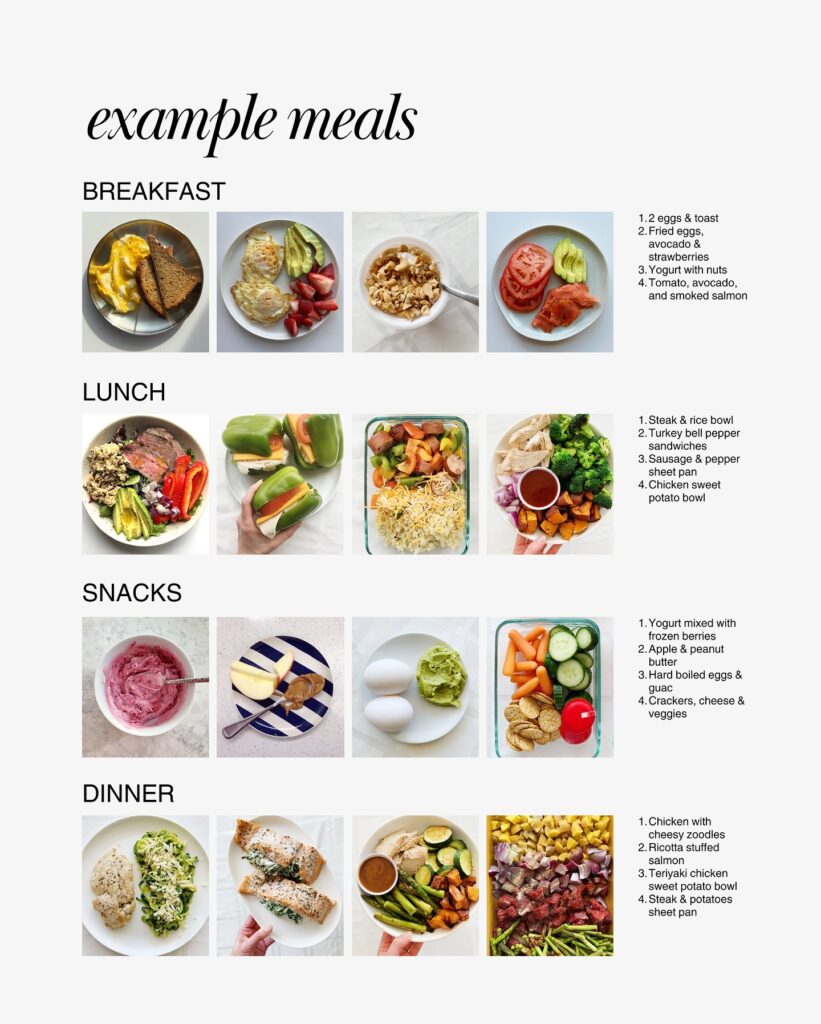
These meals follow the formula and support fat loss without restriction.
Breakfast
- Eggs + toast + fruit – ~300-350 calories
- Greek yogurt + nuts + berries – ~250-300 calories
- Eggs + avocado + strawberries – ~350 calories
- Smoked salmon + tomato + avocado – ~300 calories
Lunch
- Steak + rice + veggies – ~500 calories
- Turkey bell pepper sandwiches + fruit – ~400 calories
- Chicken + sweet potato + broccoli – ~450-500 calories
- Sausage + peppers + potatoes – ~450 calories
Snacks
- Greek yogurt + frozen berries – ~150 calories
- Apple + peanut butter – ~200 calories
- Hard boiled eggs + guacamole – ~180 calories
- Crackers + cheese + veggies – ~200 calories
Dinner
- Chicken + zucchini noodles + parmesan – ~400 calories
- Ricotta stuffed salmon + greens – ~450 calories
- Teriyaki chicken + sweet potato bowl – ~500 calories
- Steak + roasted vegetables – ~500 calories
Helpful tips:
- Repeat meals you enjoy to simplify your routine
- Prep proteins ahead of time to reduce decision fatigue
- Keep easy snacks available to avoid overeating later
Be in a Calorie Deficit
Fat loss requires a calorie deficit, but the size of that deficit matters.
A small, steady deficit is more effective for preserving muscle and avoiding burnout.
Aim for:
- About a 300-500-calorie deficit per day
- Roughly 0.5 lb weight loss per week
Why this matters:
- Large deficits increase muscle breakdown
- They raise hunger hormones and lower energy
- They often lead to inconsistency and rebound eating
Listen to your body:
- Eat when you are hungry
- Stop when you are satisfied, not overly full
- Some days will be higher or lower; that is normal
Helpful tips:
- Focus on weekly consistency, not daily perfection
- Avoid skipping meals just to “save calories.”
- Fuel your body enough to function well
Do Resistance Exercise
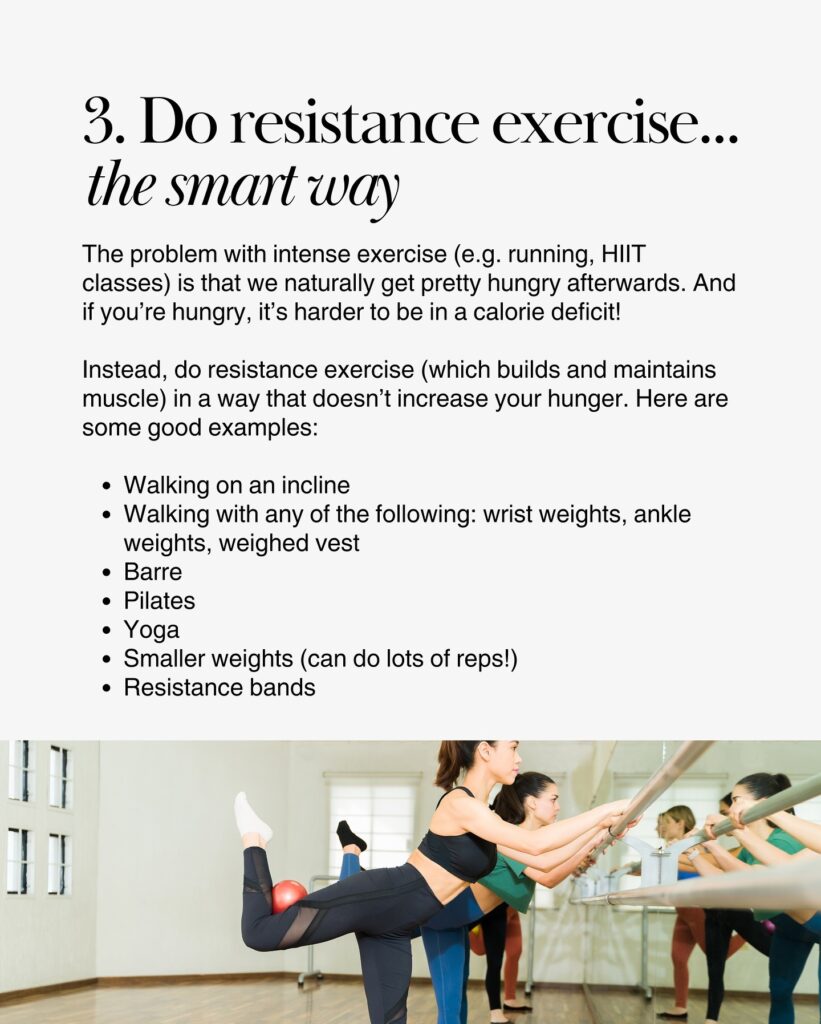
Movement supports fat loss, but the type of movement matters.
Resistance-based exercise helps maintain muscle, which keeps your metabolism higher and your body stronger during weight loss.
Examples:
- Incline walking
- Light weights with higher repetitions
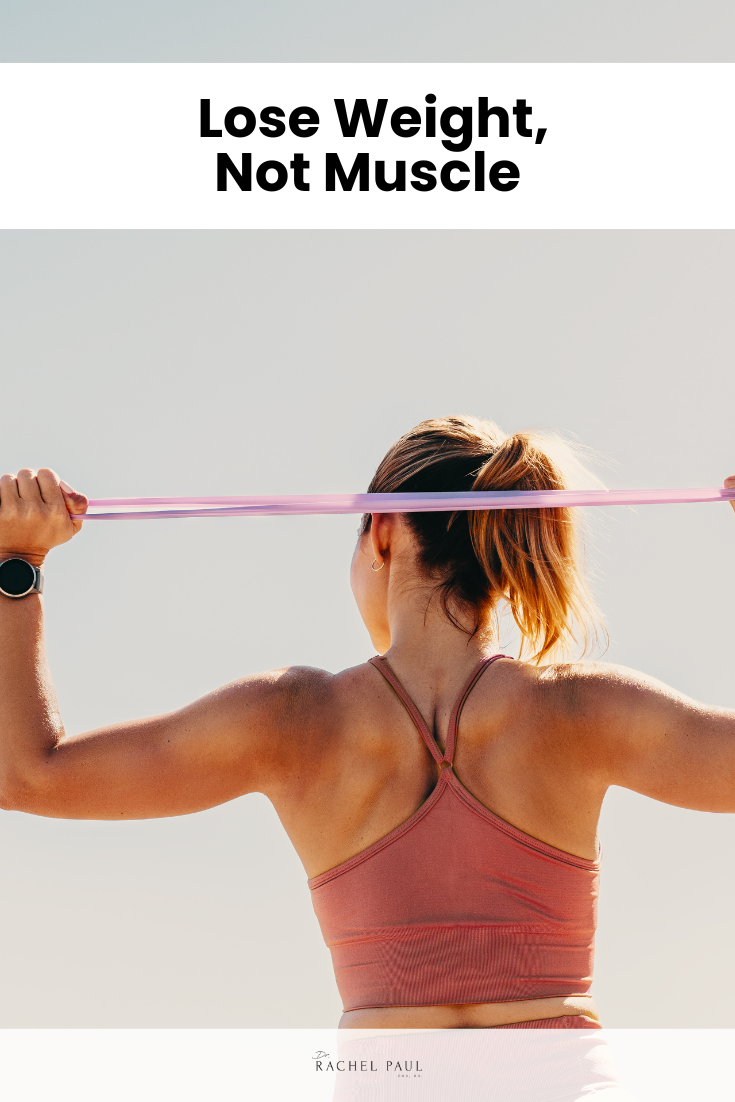
- Resistance bands
- Pilates or barre
- Yoga
Why not only intense cardio:
High-intensity workouts can increase hunger and make it harder to stay in a calorie deficit. They are not bad, but they are not required for fat loss.
Helpful tips:
- Aim for 2-4 strength-focused sessions per week
- Combine movement with daily walking for overall activity
- Choose workouts you enjoy so you stay consistent
The Science Behind Keeping Muscle While Losing Weight
Your body is constantly remodeling muscle through two opposing processes:
- Muscle protein synthesis (building)
- Muscle protein breakdown (losing)
When you diet aggressively or eat too little protein, breakdown increases. This leads to muscle loss.
When you:
- Eat enough protein
- Include resistance exercise
- Maintain a moderate calorie deficit
You support muscle protein synthesis and reduce breakdown.
Research shows:
- Higher protein intake helps preserve lean mass during weight loss
- Resistance training signals the body to keep muscle tissue
- Slow, steady weight loss leads to better body composition outcomes
Another key factor is metabolism:
Muscle is a metabolically active tissue. The more muscle you maintain, the more calories your body burns at rest. Losing muscle can lower your metabolic rate, making long-term weight maintenance harder.
In simple terms:
- Protein protects
- Strength training signals
- Consistency sustains
Keep the Muscle, Lose the Weight
You do not need extreme diets, cutting out food groups, or exhausting workouts to lose weight.
Focus on:
- Prioritizing protein
- Building balanced meals
- Staying in a small calorie deficit
- Moving your body with intention
This approach helps you feel stronger, more energized, and more in control of your habits.
Progress may feel slower, but it is more sustainable and leads to better long-term results.
If you want a simple way to get started: