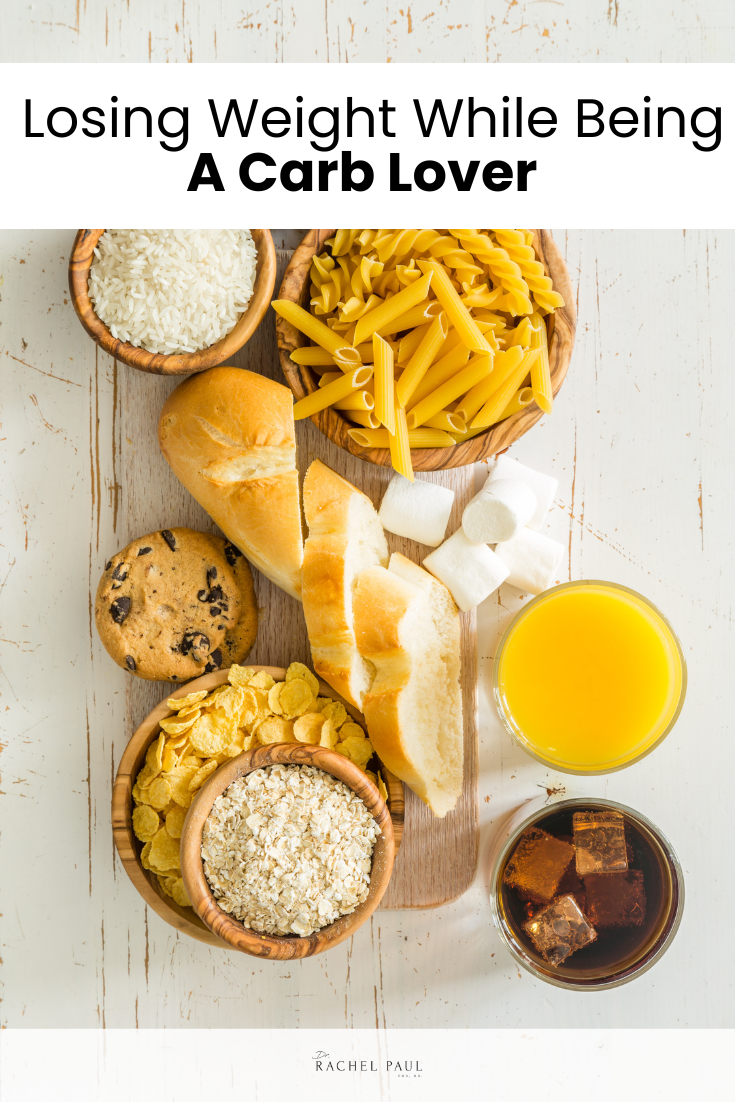
Many people believe they must eliminate bread, pasta, or rice to lose weight, but losing weight while being a carb lover IS possible. This idea is common in popular diet trends, but research shows that weight loss can occur with many different eating patterns as long as total calorie intake is appropriate.
Carbohydrates are not inherently fattening. They are simply one of the three main macronutrients your body uses for energy. In fact, carbohydrates fuel your brain, support exercise performance, and help maintain normal metabolic function.
The challenge is not carbohydrates themselves. The challenge is how they are often eaten. Many meals center entirely on carbs, lacking enough protein, fiber, or fat to feel full.
When carbohydrates are combined with balanced portions, whole foods, and mindful calorie intake, they can easily fit into a sustainable weight loss plan.
In this guide, you will learn practical ways to enjoy carbs while still supporting fat loss. These strategies are designed for real life and can help you maintain consistency long term.
Tips for Losing Weight While Being a Carb Lover
Embrace Carbs Efficiently for Weight Loss
Carbohydrates can support weight loss when they are eaten in ways that promote fullness and stable energy. Instead of removing carbs, the goal is to structure meals in a balanced way.
The following strategies help you enjoy carbs while still supporting fat loss.
Be a Food Snob
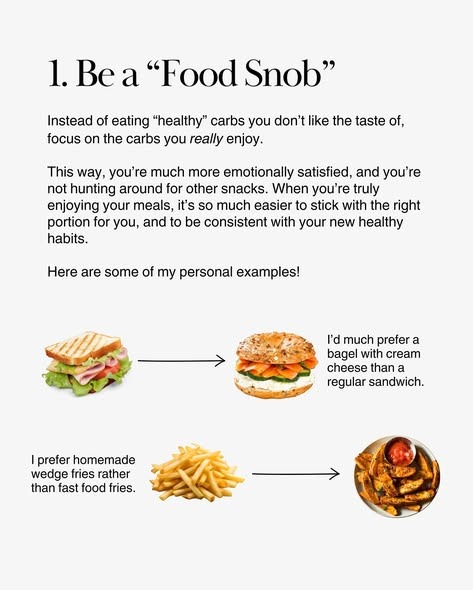
Being a “food snob” means choosing carbohydrates you genuinely enjoy instead of eating foods simply because they seem healthier.
Research in nutrition psychology shows that satisfaction plays a major role in appetite regulation. When meals feel satisfying, people are less likely to continue eating or search for additional snacks later.
If you eat a carbohydrate that does not truly satisfy you, it can trigger what researchers call “sensory-specific hunger.” This means your body continues searching for the food it actually wants.
For example:
Instead of eating a dry whole-grain sandwich you do not enjoy, you may be more satisfied with a smaller portion of something you truly love.
Examples of intentional carb choices:
• Bagel with cream cheese
Serving example: 1 bagel with 2 tbsp cream cheese
Calories: about 300-350
• Homemade wedge fries
Serving example: 1 medium potato roasted with olive oil
Calories: about 180
• Fresh bakery bread
Serving example: 1 slice artisan bread
Calories: about 120
When you choose carbs you enjoy, it becomes easier to stay within reasonable portions and avoid unnecessary snacking.
Blood Sugar Friendly Carbs
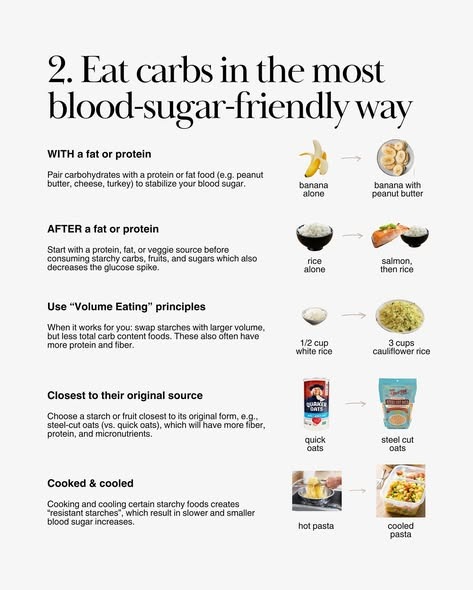
How you eat carbs matters just as much as which carbs you choose. Pairing and timing your carbs the right way can reduce blood sugar spikes, improve energy stability, and keep you fuller longer.
Here are five simple ways to make your carbs work for you:
Eat Carbs With a Fat or Protein
Pairing carbohydrates with a protein or fat (like peanut butter, cheese, or turkey) stabilizes your blood sugar response. Instead of a rapid spike and crash, your energy stays steadier, and so does your hunger.
Example: Banana alone → banana with peanut butter
Eat Carbs After a Fat or Protein
Start your meal with a protein, fat, or veggie source before moving to the starchy or sugary carbs. This simple order change decreases the glucose spike from the carbs that follow.
Example: Rice alone → salmon first, then rice
Use “Volume Eating” Principles
Swap starches for higher-volume, lower-calorie alternatives. These swaps give you more food on your plate with less total carb content. They are also usually higher in protein and fiber.
Example: ½ cup white rice → 3 cups cauliflower rice
Choose Carbs Closest to Their Original Form
The less processed a carb is, the more fiber, protein, and micronutrients it tends to have. Those nutrients slow digestion and keep you fuller.
Example: Quick oats → steel cut oats (same calories, slower digestion)
Cook and Cool Your Starches
Cooking and then cooling certain starchy foods like pasta, rice, or potatoes creates what’s called “resistant starch.” Resistant starch behaves more like fiber in your body, leading to slower and smaller blood sugar increases.
Example: Hot pasta → cooled pasta salad
Carbs on the Side
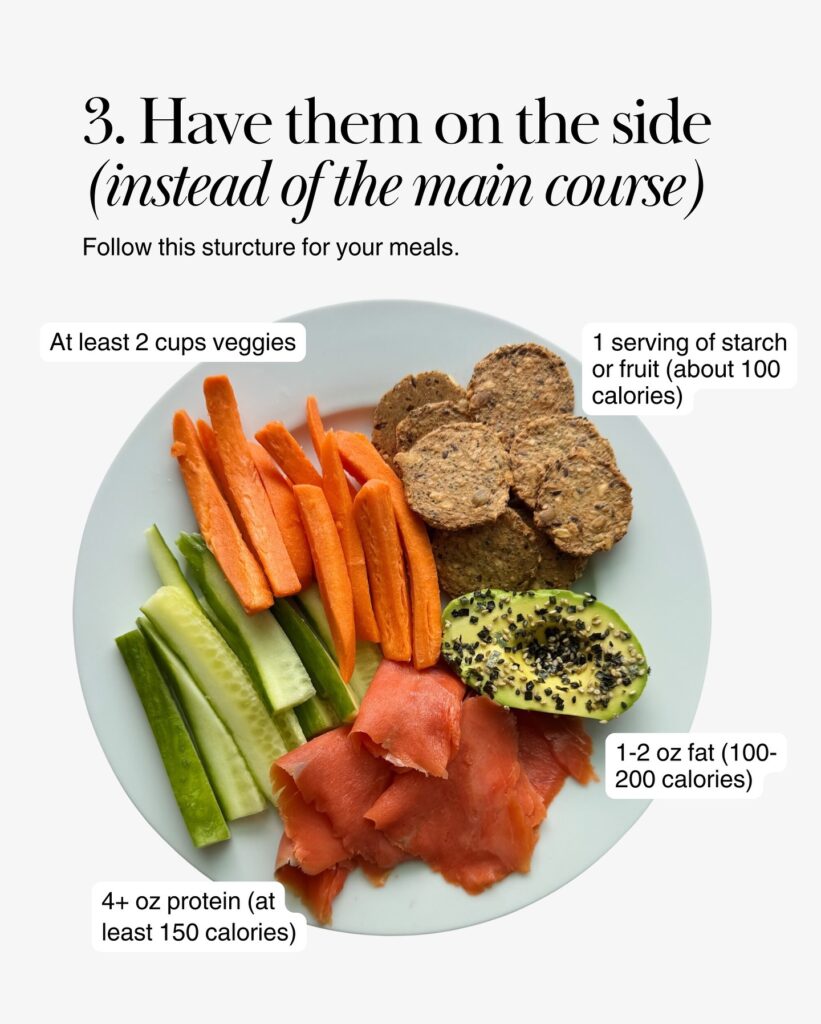
One of the most effective plate changes you can make is treating carbs as a side dish instead of the centerpiece of your meal.
Here’s a simple meal structure to follow:
- At least 2 cups of veggies: fill the bulk of your plate
- 4+ oz of protein (at least 150 calories) the anchor of your meal
- 1–2 oz of fat (100–200 calories) like avocado, olive oil, or cheese
- 1 serving of starch or fruit (about 100 calories) on the side, not the star
Why this works: Protein is the most filling macronutrient. When it anchors your meal, you naturally eat less of everything else, including the carbs. You still get them. They just aren’t doing all the heavy lifting.
A real example plate: smoked salmon, cucumber and carrot sticks, half an avocado, and a small serving of seed crackers. Satisfying, balanced, and under 500 calories.
Total Calories Matter
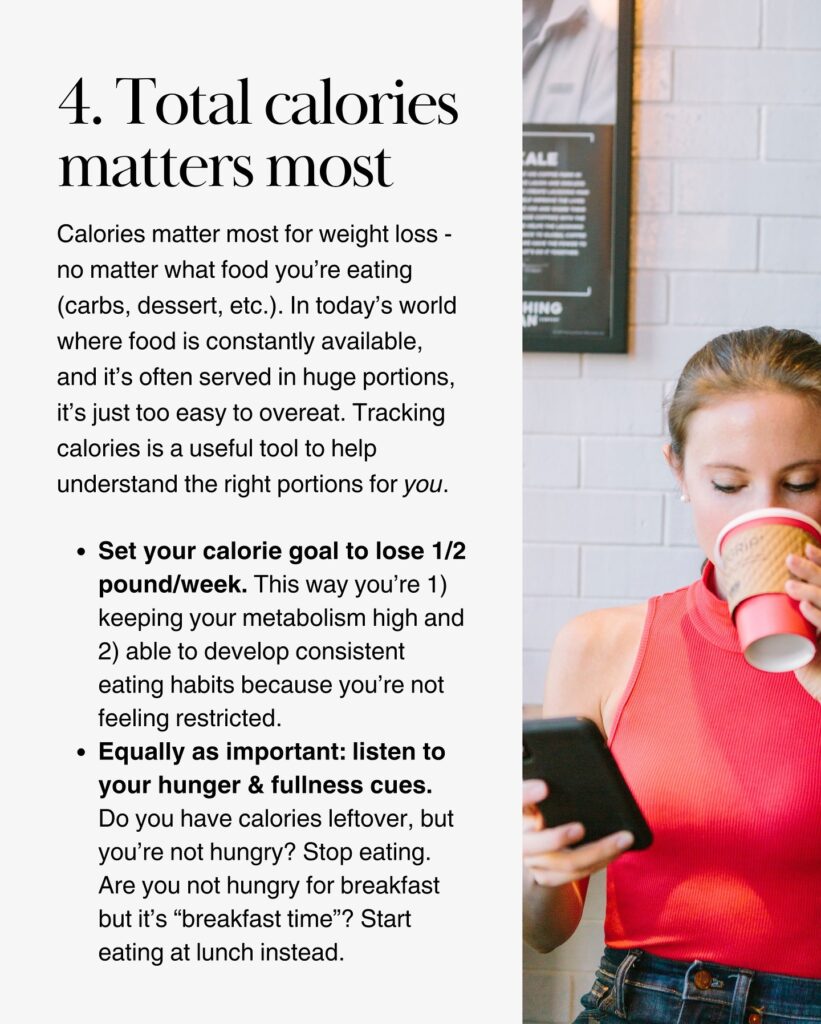
While food quality matters for health, total calorie intake remains the primary factor for weight loss.
Scientific studies consistently show that body fat decreases when calorie intake is lower than calorie expenditure over time.
Carbohydrates themselves do not automatically cause weight gain. Excess calories from any source can lead to weight gain.
Tracking food intake can help people better understand their portion sizes.
Helpful strategies include:
• Aim for a calorie deficit that supports about 0.5 pounds of weight loss per week
• Slower weight loss often helps maintain muscle and metabolism
• Focus on consistency rather than perfection
Hunger and fullness cues also matter.
Examples:
• If you feel full before finishing a meal, it is okay to stop eating
• If you are not hungry for breakfast, starting with lunch may feel better for your body
Combining calorie awareness with hunger signals can create a sustainable approach to weight loss.
Why This Approach Works
Highly restrictive diets often fail because they remove foods people enjoy. When favorite foods are eliminated, cravings may increase, and consistency becomes difficult.
Including carbohydrates in a structured way allows people to:
• Maintain satisfaction with meals
• Reduce cravings and overeating
• Support stable energy levels
• Sustain healthy eating habits long term
This approach focuses on balance rather than restriction.
Eat Carbs and Still Lose Weight
You do not need to eliminate carbohydrates to lose weight.
Instead, focus on these habits:
• Choose carbs you truly enjoy
• Pair carbs with protein, fat, or fiber
• Keep carbs as a side portion in meals
• Stay aware of total calorie intake
These strategies allow carbohydrates to remain part of a balanced and sustainable eating pattern.
Get Additional Support
Get my free Beginner’s Guide to Weight Loss to get started!
Or join Best Body for a fully personalized weight loss plan, dietitian-created recipes, group coaching calls, and over 70 trainings on topics like cravings, protein intake, and staying consistent.If you want step-by-step guidance, recipes, and coaching, my Best Body program can help.