Learning how to lose weight without losing muscle is one of the most common things my clients come to me wanting to do – and I completely understand why. You want the number on the scale to go down, but you also want to feel strong, look toned, and keep your metabolism working for you. In this post, I am walking you through exactly how we approach this inside Best Body.
One important note before we dive in: any time you lose weight, you will likely lose at least a small amount of muscle. It is pretty unrealistic to expect 100% body fat loss and zero muscle loss. But if you follow this approach, you will be focusing on burning body fat while protecting your muscle as much as possible. That is the goal.
4 Steps to Lose Weight Without Losing Muscle
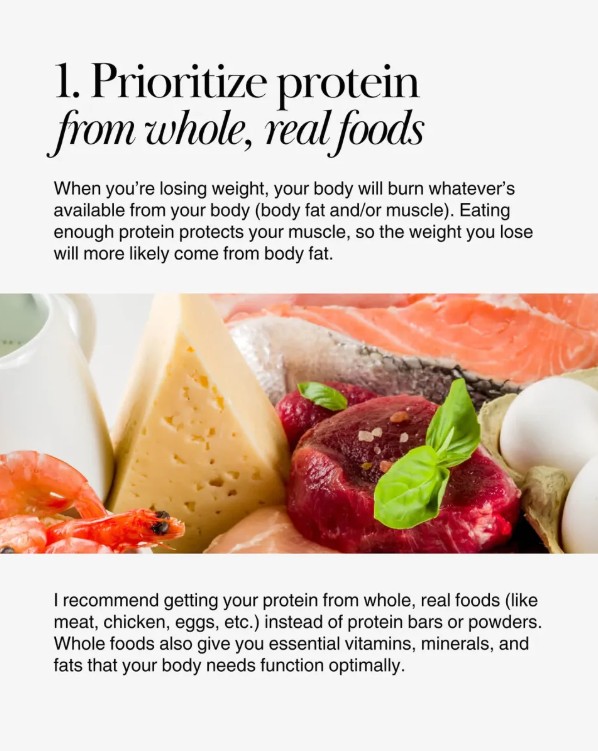
Step 1: Prioritize Protein from Whole, Real Foods
This is the single most important thing I tell my clients when it comes to protecting muscle during weight loss. When you are losing weight, your body will burn whatever is available – body fat and muscle. Eating enough protein signals your body to protect that muscle, so the weight you lose comes primarily from body fat instead.
I always recommend getting your protein from whole, real foods – meat, chicken, fish, eggs, cottage cheese – rather than protein bars or powders. Whole foods give you the protein you need along with essential vitamins, minerals, and fats that your body needs to function optimally. Supplements can fill a gap, but they should not be your primary source.
Aim for at least 4 oz of protein at every meal. That is the target I use with my clients and it makes a real difference.
Step 2: Build Your Meals Using My Formula
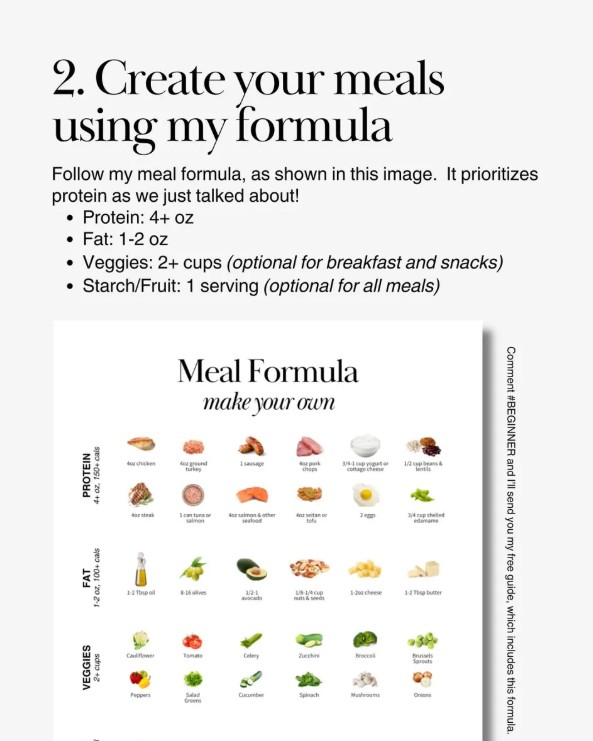
Eating enough protein is step one. Building your meals in a way that supports it consistently is step two. I use the same meal formula with all of my clients because it takes the guesswork out completely:
- Protein: 4+ oz (at least 150 calories)
- Fat: 1-2 oz (about 100 calories)
- Veggies: 2+ cups (optional for breakfast and snacks)
- Starch/Fruit: 1 serving (optional for all meals)
This formula keeps protein front and center at every meal, which is exactly what your muscle needs. It also keeps you full, which makes staying in a calorie deficit so much easier.
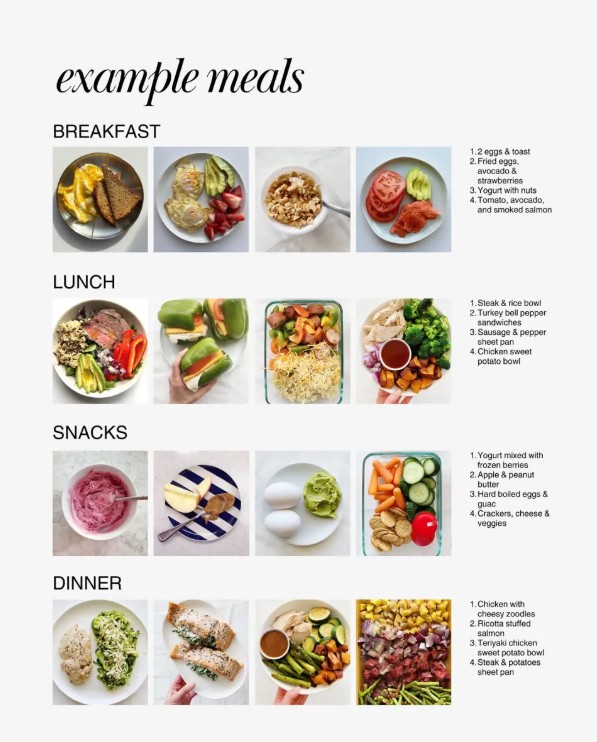
Here are some real meal ideas I share with my clients that follow this formula:
Breakfast
- 2 eggs and toast
- Fried eggs, avocado, and strawberries
- Yogurt with nuts
- Tomato, avocado, and smoked salmon
Lunch
- Steak and rice bowl
- Turkey bell pepper sandwiches
- Sausage and pepper sheet pan
- Chicken sweet potato bowl
Snacks
- Yogurt mixed with frozen berries
- Apple and peanut butter
- Hard boiled eggs and guac
- Crackers, cheese, and veggies
Dinner
- Chicken with cheesy zoodles
- Ricotta stuffed salmon
- Teriyaki chicken sweet potato bowl
- Steak and potatoes sheet pan
Step 3: Do Resistance Exercise the Smart Way
Here is something I talk about a lot with my clients: intense cardio – running, HIIT classes, spin – naturally makes you hungrier. And when you are hungrier, it is a lot harder to stay in a calorie deficit. That works against your goals.
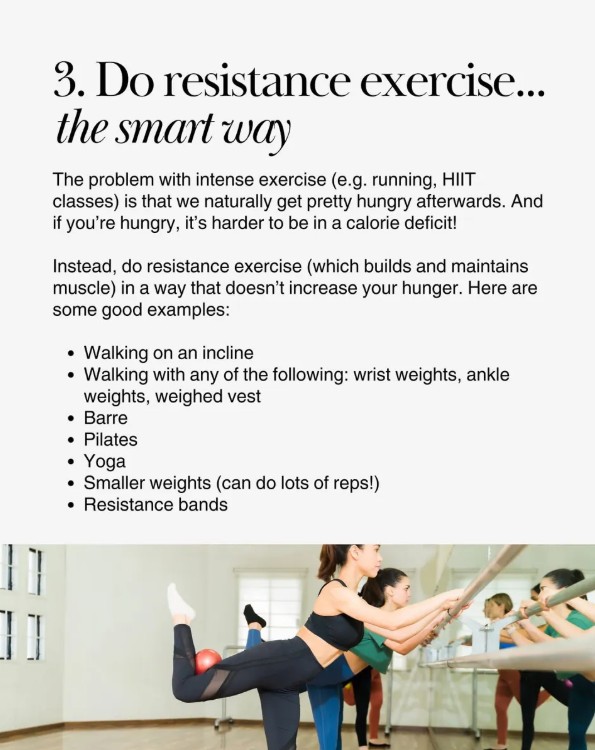
Instead, I recommend focusing on resistance exercise that builds and maintains muscle without spiking your hunger. Some of my favorite options to recommend:
- Walking on an incline
- Walking with wrist weights, ankle weights, or a weighted vest
- Barre
- Pilates
- Yoga
- Lighter weights with higher reps
- Resistance bands
These types of movement protect and build your muscle without making you ravenous afterward. That combination is exactly what supports fat loss while keeping your muscle intact.
Step 4: Stay in a Small Calorie Deficit
This is where I see so many people go wrong. They cut calories too aggressively, their metabolism slows down because their body thinks it is in survival mode, and muscle loss accelerates. A massive calorie cut is not the answer.
Instead, here is what I recommend:
Set your calorie goal to lose about 1/2 pound per week. I know that sounds slow, but this approach does two very important things. First, it keeps your metabolism working the way it should. Second, it means you are not feeling so restricted that you cannot stay consistent. Consistency over time is what actually produces results.
Equally as important: listen to your hunger and fullness cues. Do you have calories left for the day but you are not hungry? Stop eating. Not hungry for breakfast but it is “breakfast time”? Start eating at lunch instead. Your body’s signals matter, and learning to work with them is a skill we focus on a lot inside Best Body.
Frequently Asked Questions About Losing Weight Without Losing Muscle
How much protein do I need to keep my muscle while losing weight?
A general starting point is about 0.7 to 1 gram of protein per pound of body weight per day. In practical terms, I tell my clients to aim for 4+ oz of protein at every meal from whole food sources. If you want a personalized target based on your specific goals, that is something we work through together inside Best Body.
Will I lose muscle if I do cardio?
Not necessarily, but intense cardio can increase hunger significantly, which makes it harder to stay in a calorie deficit. I recommend focusing on lower-intensity resistance exercise – barre, Pilates, incline walking, resistance bands – because it protects muscle without driving up appetite the way high-intensity cardio often does.
How fast should I lose weight to protect my muscle?
Slow and steady really does win here. Aiming for about 1/2 pound per week keeps your metabolism working properly and reduces the amount of muscle you lose in the process. Faster weight loss usually means more muscle loss – and it is much harder to sustain.
Can I build muscle and lose fat at the same time?
This is possible, especially if you are newer to resistance training or returning after a break. It becomes more difficult the more experienced you are. The strategies in this post – enough protein, the right type of exercise, a small calorie deficit – give you the best possible shot at doing both simultaneously.
What happens if I do not eat enough protein while losing weight?
Your body will break down muscle tissue for energy instead of relying primarily on body fat. That is exactly what we are trying to avoid. Low protein ( also fiber) intake is one of the most common mistakes I see, and it is also one of the easiest to fix once you know what to look for.
Final Thoughts on How to Lose Weight Without Losing Muscle
Most people want to lose body fat and keep their muscle – and that is completely realistic if you approach it the right way. Prioritize protein from whole foods, build your meals using a simple formula, choose resistance exercise that does not spike your hunger, and stay in a small and sustainable calorie deficit. Follow those four steps consistently and your body will do the rest.
If you want all of this mapped out for you with personalized meal plans, calorie targets, and the support of a coaching team, I would love for you to join us inside Best Body. It is the program I built for exactly this. Learn more and join here!
Want to start with something free? Grab my free resources including the meal formula cheat sheet at DrRachelPaul.com/free-downloads.