As simple as it sounds, you can enjoy losing weight by building habits that actually fit your real life. A lot of people think weight loss has to feel restrictive, exhausting, or miserable to work. In reality, the more sustainable your habits are, the easier it becomes to stay consistent long term. You do not need to force yourself to eat bland foods, avoid every dessert, or spend hours doing workouts you hate.
This post covers 7 practical tips to help you enjoy your weight loss journey while still making progress. These strategies focus on satisfaction, fullness, consistency, and realistic routines that support healthy habits without making you feel deprived. If you struggle with overeating, emotional eating, starting over every Monday, or constantly falling off restrictive plans, these tips can help simplify things.
Weight loss works best when you create habits you can repeat consistently. That means choosing foods you genuinely like, eating meals that keep you full, moving your body in ways that feel manageable, and prioritizing sleep and recovery. The goal is not perfection, but building a lifestyle you can realistically maintain.
7 Tips on How to Enjoy Losing Weight Throughout Your Journey
Eat Foods You Like
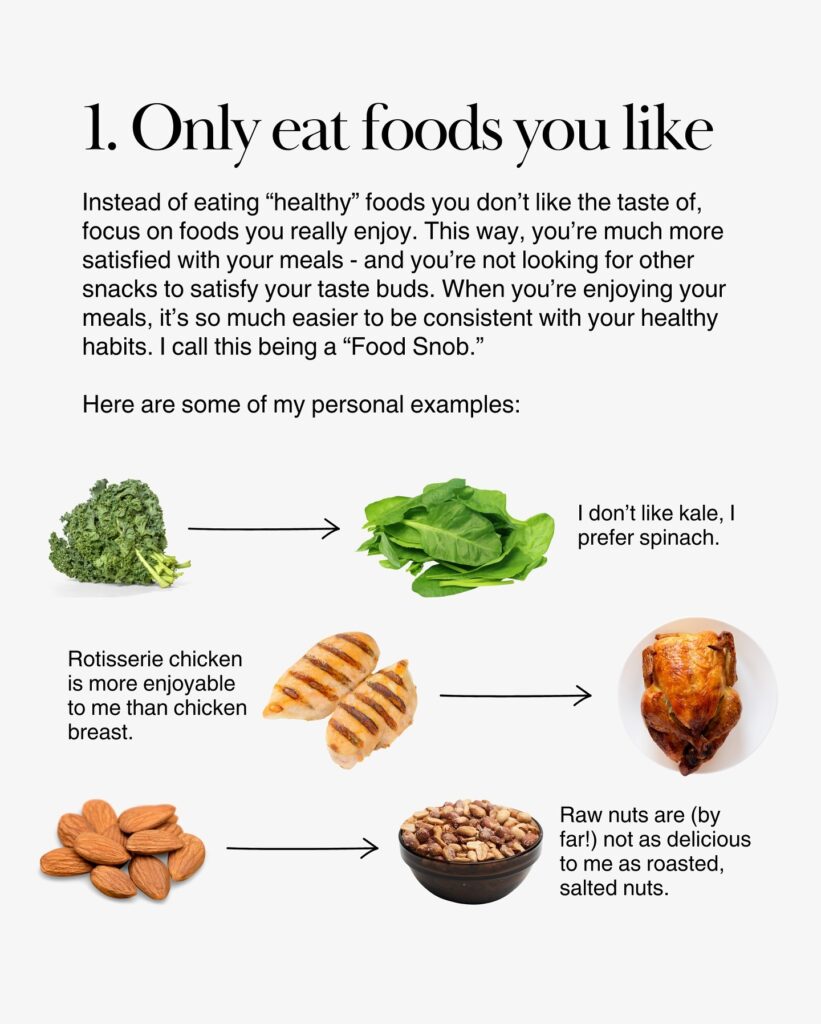
One of the biggest mistakes people make during weight loss is forcing themselves to eat foods they do not actually enjoy. If you hate kale, you do not need to eat kale. If plain chicken breast feels boring, choose another protein option you enjoy more.
When meals feel satisfying, it becomes much easier to stay consistent with healthy habits. Enjoying your meals can also help reduce the urge to snack constantly or to search for treats later, because they actually feel fulfilling.
Simple swaps can make healthy eating feel much more realistic:
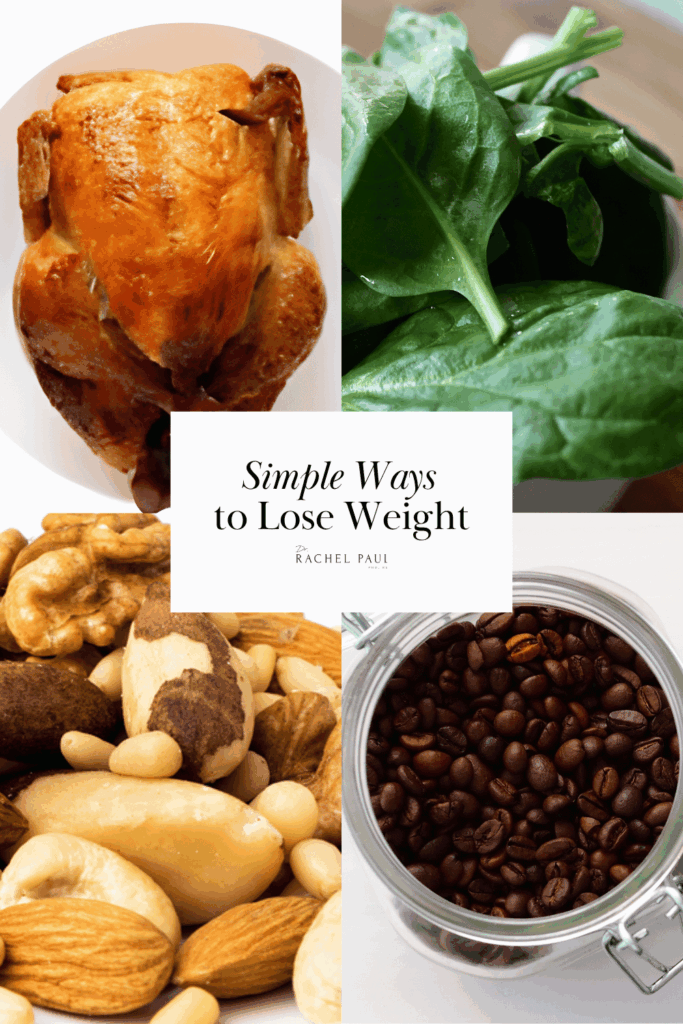
- Choose spinach instead of kale
- Buy rotisserie chicken instead of plain grilled chicken breast
- Pick roasted salted nuts instead of raw nuts if they help you feel more satisfied
- Use seasonings, sauces, and cooking methods you enjoy
You are much more likely to maintain healthy habits when your meals taste good.
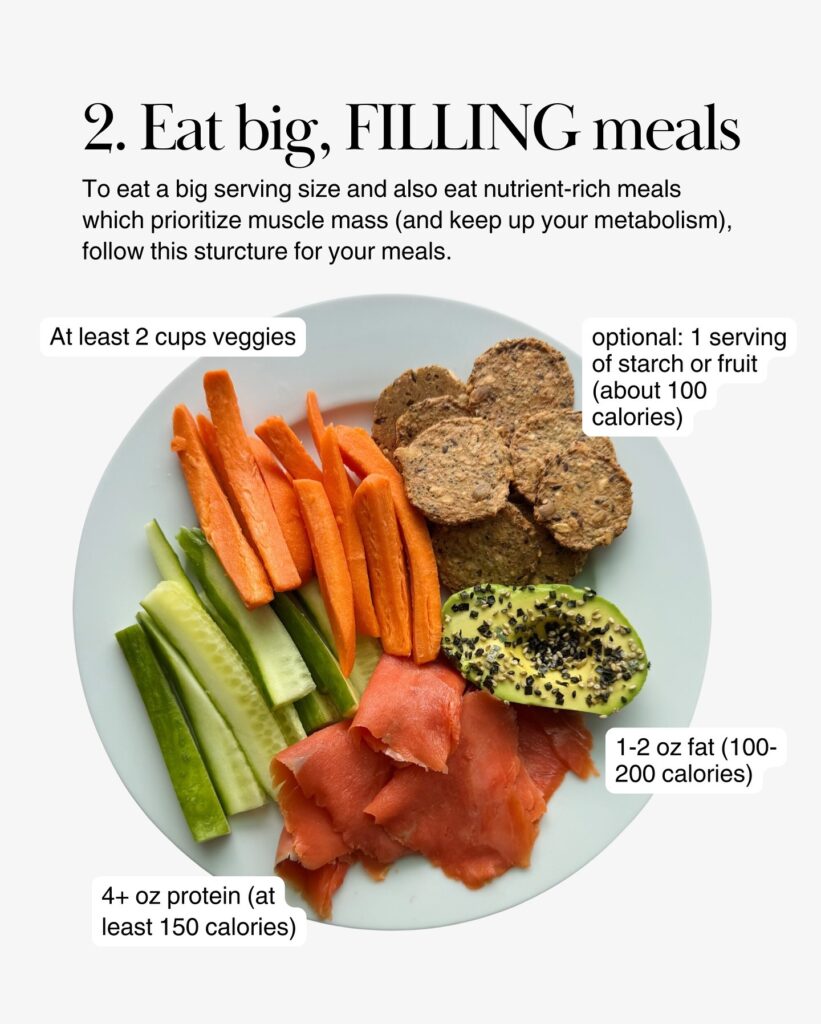
Eat Big, Filling Meals
A lot of people assume eating less volume is the key to losing weight. In reality, large, nutrient-dense meals can help you stay full longer and reduce mindless snacking throughout the day.
Try building meals with this simple structure:
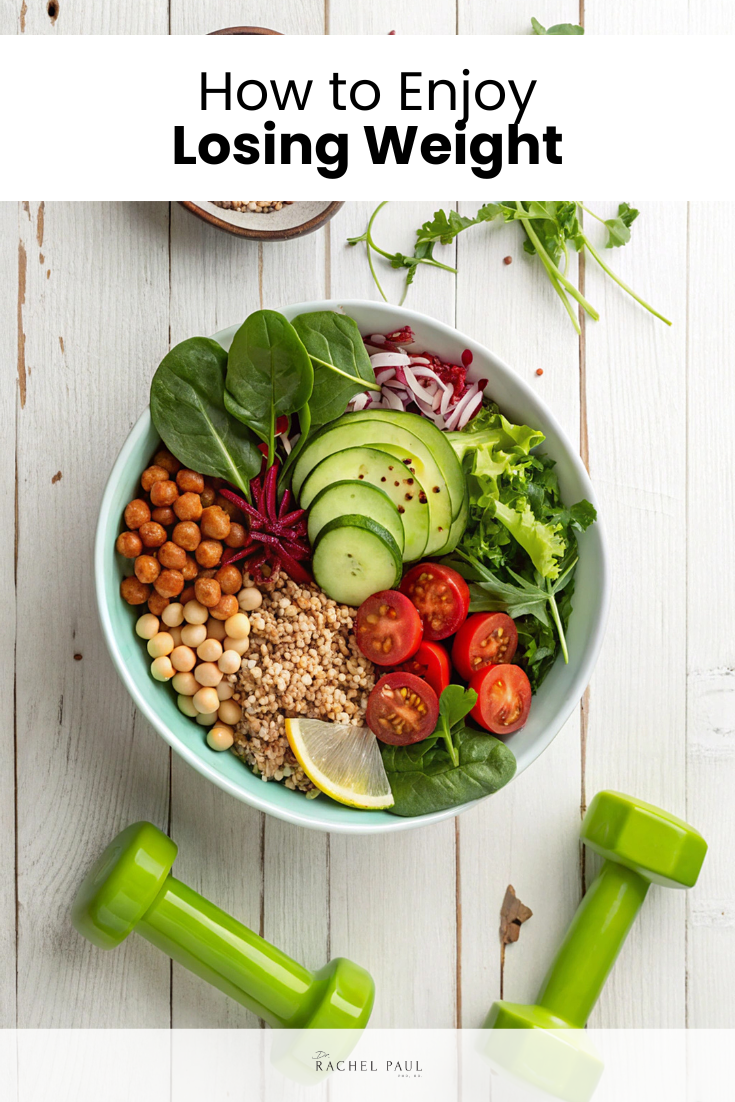
- At least 2 cups of vegetables
- 4+ ounces protein
- 1-2 servings of healthy fat
- Optional serving of fruit or starch
Protein and fiber are especially helpful for fullness. Vegetables add volume to meals without dramatically increasing calories.
Examples of filling meal ingredients:
- Cucumbers
- Carrots
- Broccoli
- Chicken
- Salmon
- Eggs
- Avocado
- Greek yogurt
- Potatoes
- Fruit
A meal with protein, fiber, and healthy fats often feels far more satisfying than small snack-style meals throughout the day.
Sugar Tweaks
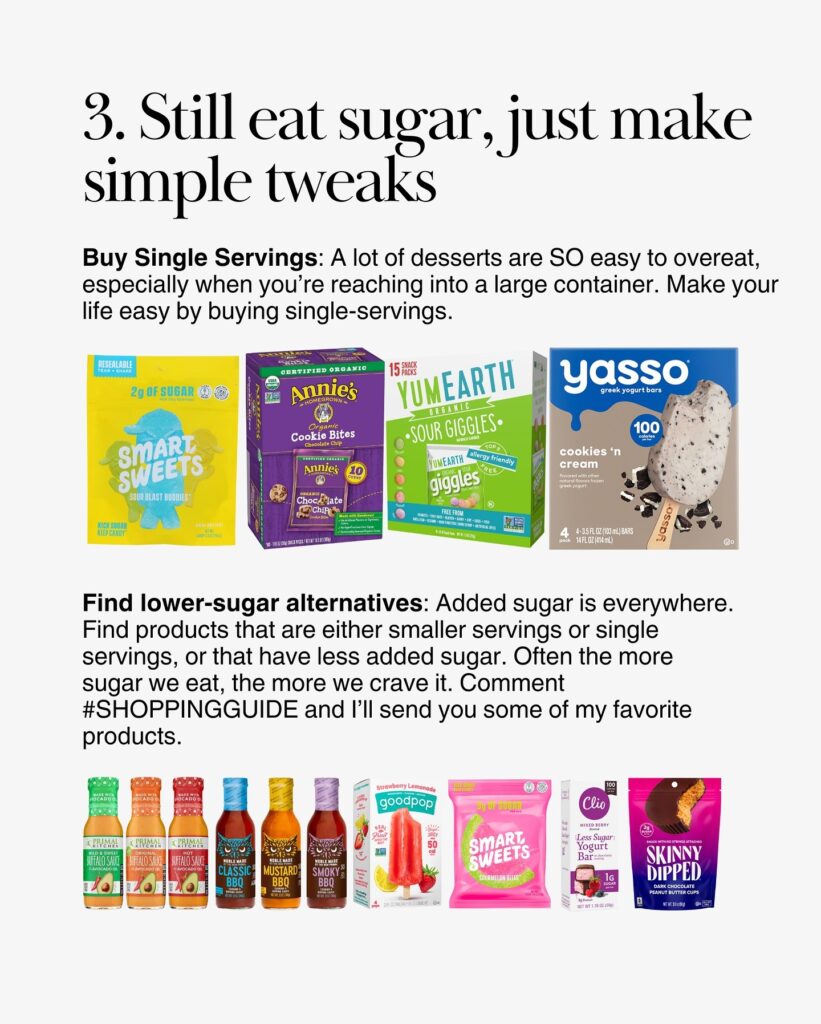
You do not have to completely avoid sugar to lose weight. Small adjustments can make a big difference while still allowing room for foods you enjoy.
Buying single-serving desserts can help reduce overeating. Large containers often make portion sizes difficult to manage.
Examples of simple dessert options:
- Yasso Greek yogurt bars – about 100 calories each
- SmartSweets candy – lower sugar candy options
- Annie’s cookie bites – portion-controlled packs
- Clio yogurt bars
- SkinnyDipped peanut butter cups
You can also look for lower-sugar versions of common foods:
- Lower sugar sauces
- Lower sugar barbecue sauces
- Greek yogurt desserts
- Fruit-based frozen treats
- Individually packaged snacks
Often, reducing added sugar gradually feels more realistic than trying to eliminate it.
Don’t Over-Restrict Calories
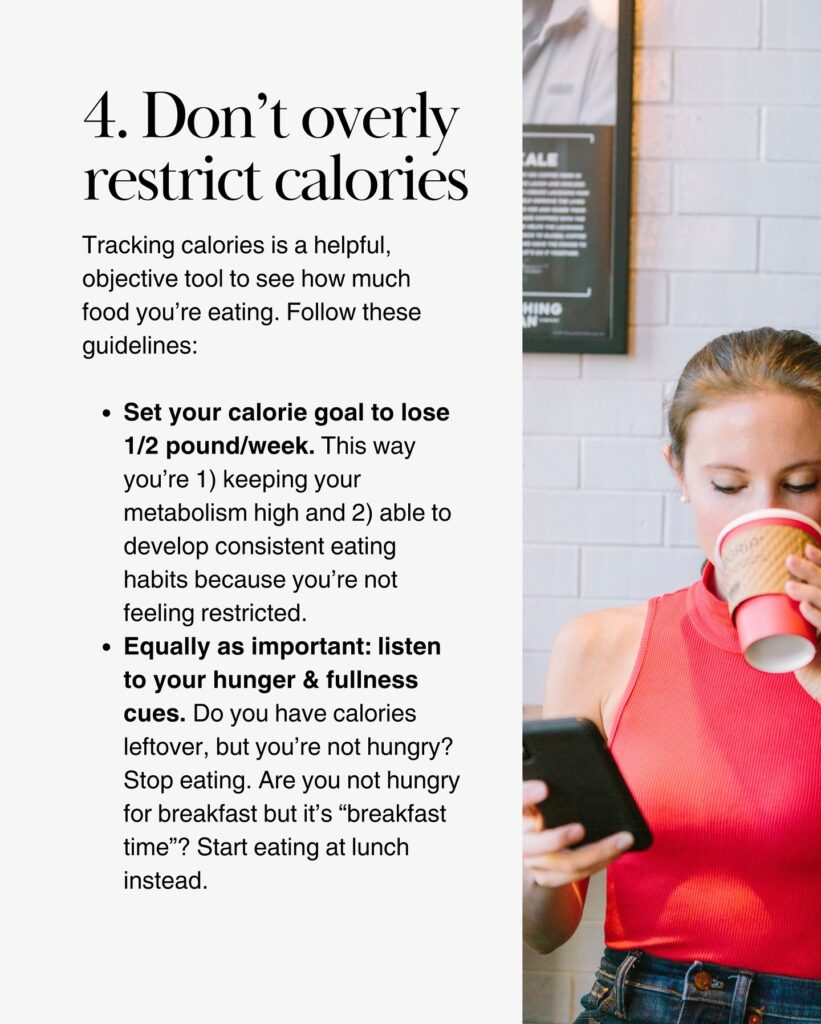
Extreme calorie restriction usually backfires. When calories get too low, hunger increases, energy drops, and consistency becomes much harder.
A slower, more sustainable approach often works better long term.
Helpful guidelines include:
- Aim for gradual weight loss
- Focus on balanced meals instead of eating as little as possible
- Listen to hunger and fullness cues
- Stop eating when satisfied, not overly full
- Avoid the all-or-nothing mindset
Some days you may naturally feel hungrier than others. That is normal. Flexible eating habits are often easier to maintain than rigid rules.
Tracking calories can be helpful for awareness, but it should not feel obsessive or punishing.
Liquid Hacks
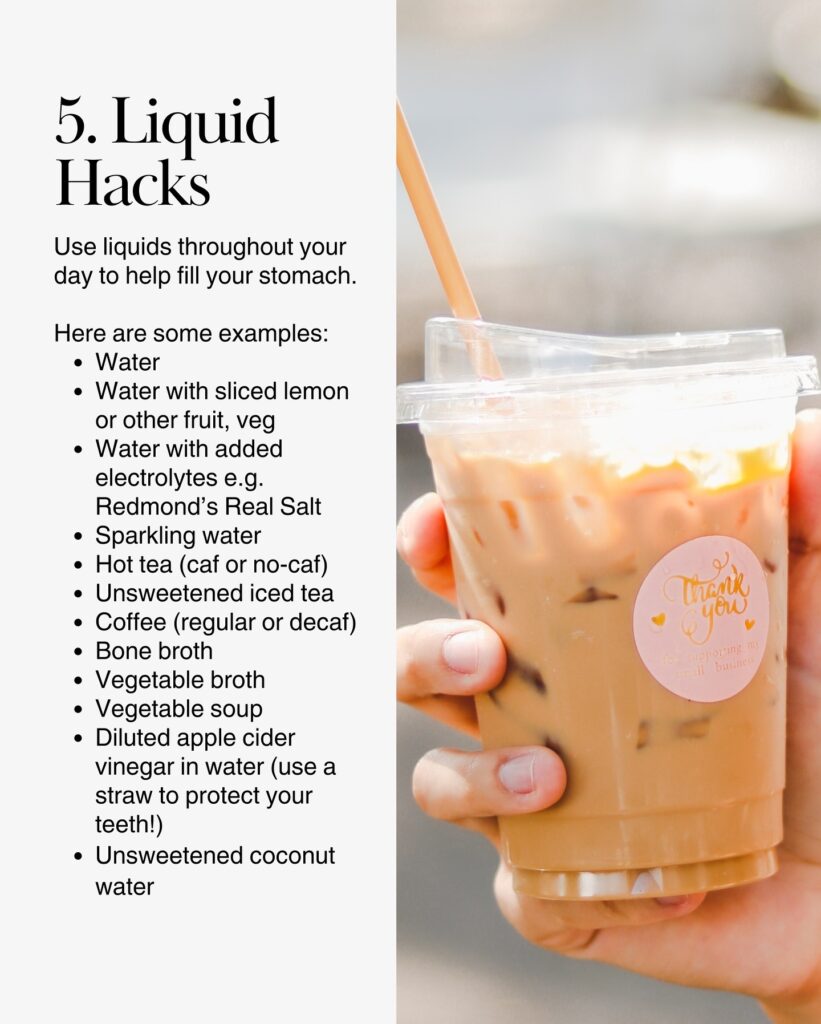
Liquids can help support fullness throughout the day, especially between meals.
Some low-calorie options include:
- Water
- Sparkling water
- Hot tea
- Unsweetened iced tea
- Coffee
- Bone broth
- Vegetable soup
- Coconut water
- Water with lemon or fruit slices
Many people also find that staying hydrated helps reduce unnecessary snacking that is actually thirst.
Warm liquids like tea or broth can also feel comforting and satisfying during busy days.
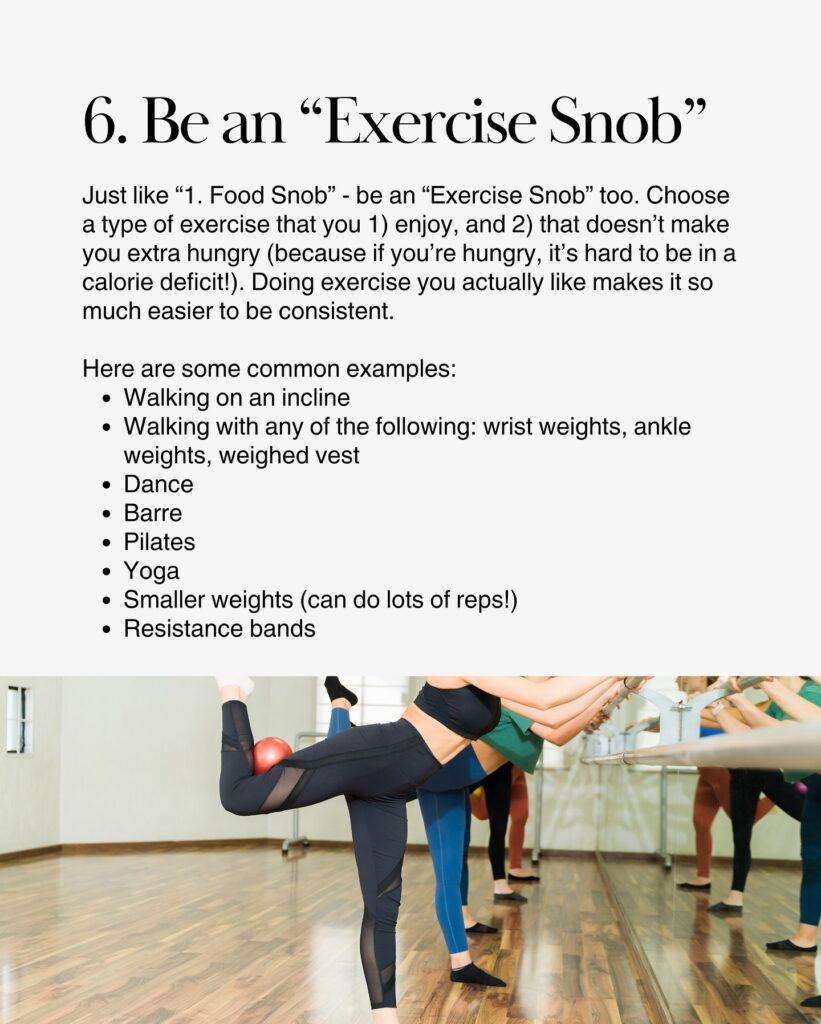
Be an “Exercise Snob”
You do not need to force yourself into workouts you hate. The best exercise routine is usually the one you will actually continue doing consistently.
Choose a movement that feels enjoyable and realistic for your lifestyle.
Examples include:
- Walking
- Incline walking
- Dance workouts
- Pilates
- Yoga
- Barre
- Resistance bands
- Light weights with higher reps
Exercise does not need to feel extreme to be effective. Consistency matters far more than intensity for most people trying to build long-term habits.
If a workout leaves you exhausted, miserable, or constantly starving, it may not be the best fit for you.
Prioritize Sleep
Sleep plays a major role in hunger, cravings, energy, and recovery. When you are exhausted, healthy habits become much harder to maintain.
Lack of sleep can affect:
- Hunger hormones
- Appetite
- Energy levels
- Food cravings
- Motivation to cook or exercise
Many people notice they reach for convenience foods, sugary drinks, or extra snacks when they are tired.
Helpful sleep habits include:
- Going to bed earlier
- Limiting late-night scrolling
- Creating a bedtime routine
- Reducing caffeine late in the day
- Keeping a consistent sleep schedule
Better sleep often makes healthy eating feel easier naturally.
Losing Weight Doesn’t Mean Bland and Boring
Weight loss does not require perfect eating or giving up every food you enjoy. In fact, overly strict plans are often harder to maintain because they create feelings of restriction.
Meals that include protein, fiber, healthy fats, and foods you genuinely enjoy can help you stay satisfied while supporting your goals. Consistency matters more than trying to eat perfectly for a few days before burning out.
Simple habits like drinking more water, prioritizing sleep, choosing movement you enjoy, and eating balanced meals can support weight loss in a much more sustainable way.
The goal is not punishment. The goal is to build habits you can realistically maintain over the long term.
Enjoy Losing the Weight
Losing weight does not have to feel miserable. Small, realistic habits can help you feel more satisfied, energized, and consistent without relying on extreme restriction.
Focus on meals you enjoy, prioritize fullness, stay flexible, and choose routines that fit your real life. Those habits are often much easier to maintain than overly strict plans that leave you feeling exhausted or deprived.
For more realistic weight loss tips and meal ideas, visit Best Body to grab a free one-week meal plan!