Mindless eating at home is one of the biggest reasons people struggle to lose weight. It often happens when you’re bored, stressed, tired, or simply surrounded by food all day. The good news is that you do not have to rely on willpower alone to eat less.
Instead of trying to eliminate cravings or avoid your favorite foods, learning how to work with your body’s hunger and satisfaction signals can make healthy eating feel much easier. Small habits, like choosing foods you truly enjoy, building balanced meals, and finding non-food ways to relax, can help you naturally eat appropriate portions while still enjoying the foods you love.
In this guide, you’ll learn practical strategies to reduce mindless eating at home without feeling deprived. These realistic habits can help you stay satisfied, manage cravings, and build a healthier relationship with food over time.
Simple Habits That Help Prevent Mindless Eating at Home
1. Be a Food Snob
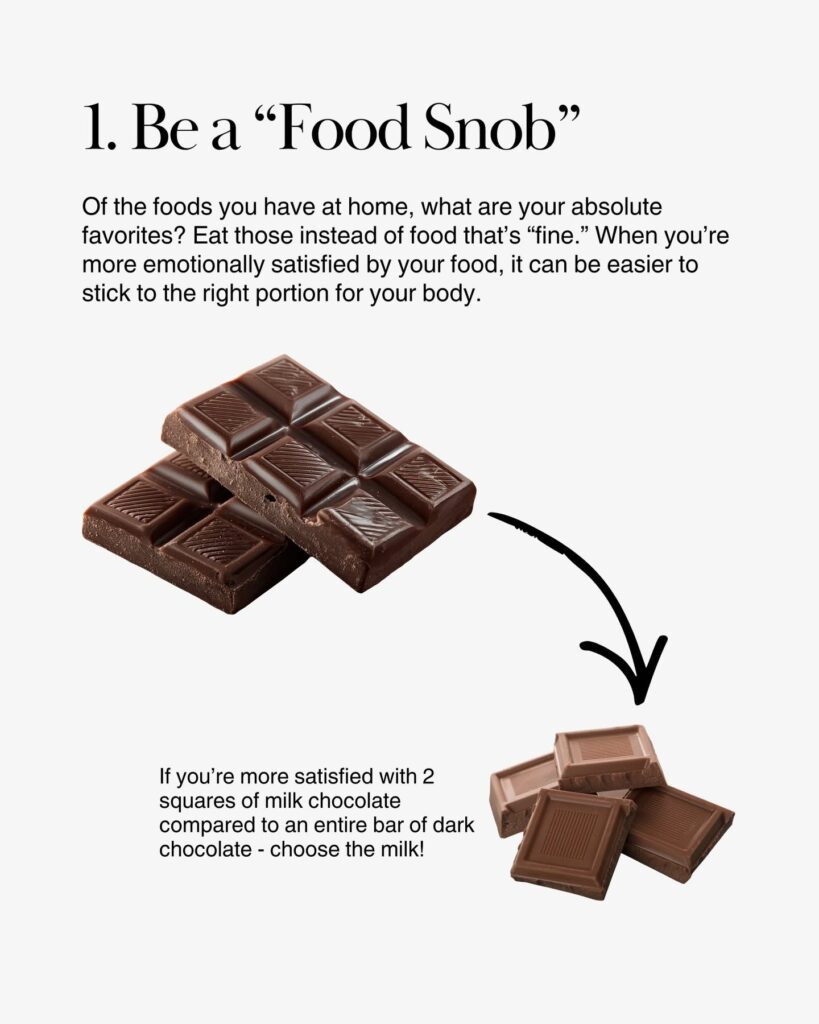
One of the easiest ways to eat less without feeling deprived is to become selective about the foods you eat. If you’re going to enjoy a treat, make it one you genuinely love rather than settling for something simply available.
Many people continue eating because the food never fully satisfies them. Choosing a dessert or snack you truly enjoy often helps you feel emotionally satisfied with a smaller portion.
For example, if two squares of milk chocolate leave you happier than an entire bar of dark chocolate you don’t actually enjoy, choose the milk chocolate. Satisfaction matters.
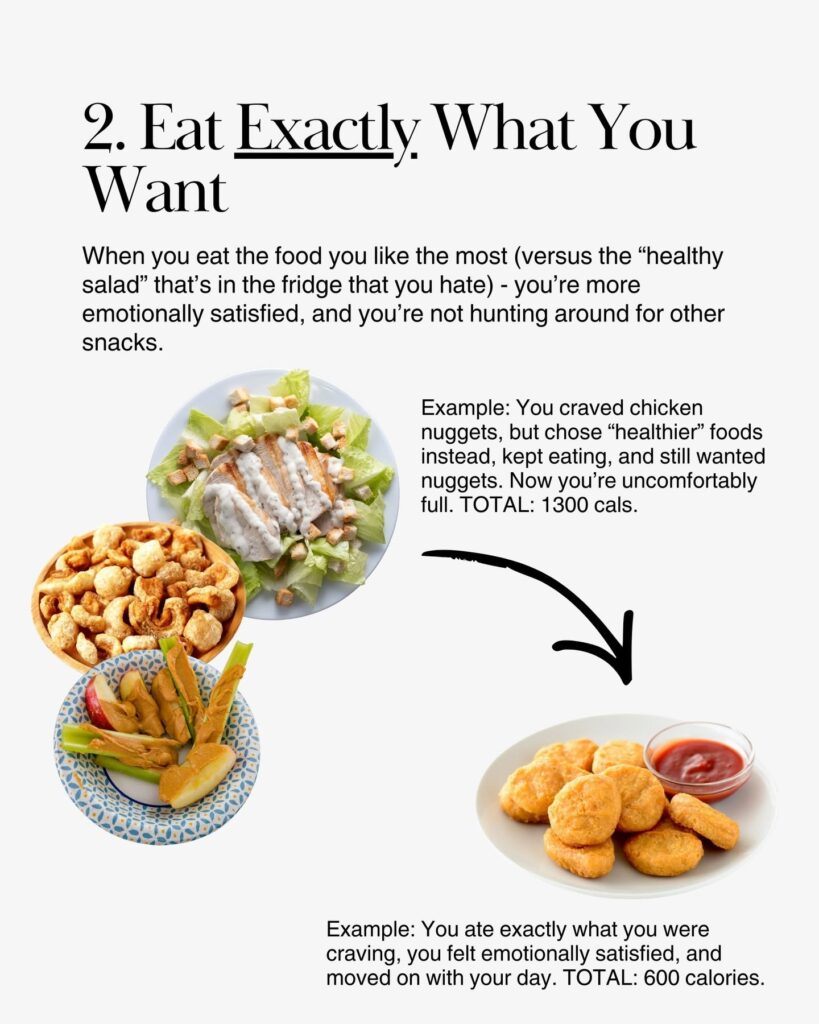
2. Eat Exactly What You Crave
Trying to “outsmart” a craving often backfires.
If you’re craving chicken nuggets but force yourself to eat salad, celery with peanut butter, and another snack instead, you may still end up eating the nuggets afterward. Instead of saving calories, you’ve simply added more food to the day.
When possible, eat a reasonable portion of the food you’re actually craving. Pair it with a balanced meal or vegetables if needed, enjoy it slowly, and move on.
This approach often leaves people feeling both physically and emotionally satisfied.
3. Build Meals with Protein, Healthy Fat, and Fiber
Balanced meals help reduce hunger between meals, making mindless snacking less likely.
Try to include:
- Protein, such as chicken, Greek yogurt, eggs, fish, lean beef, tofu, or cottage cheese.
- Healthy fats include avocado, nuts, seeds, olive oil, and cheese.
- Fiber-rich foods, including vegetables, fruit, beans, and whole grains.
This combination helps you stay fuller longer while supporting stable energy throughout the day. You can still include favorite foods in your meals. A chicken nugget salad, for example, includes protein, vegetables, and satisfying flavor all in one meal.

4. Fill Your Day with Non-Food Enjoyment
Food is not the only way to relax or reward yourself.
When eating becomes your primary source of entertainment, it’s easy to snack simply because you’re looking for something enjoyable to do.
Create a list of activities that help you recharge without involving food.
Ideas include:
- Read a book.
- Watch your favorite TV show.
- Go for a walk.
- Work on a puzzle.
- Listen to a podcast.
- Garden.
- Crochet or knit.
- Call a friend.
- Organize a room.
- Exercise using a free workout video.
Building enjoyable routines outside the kitchen can naturally reduce mindless eating.

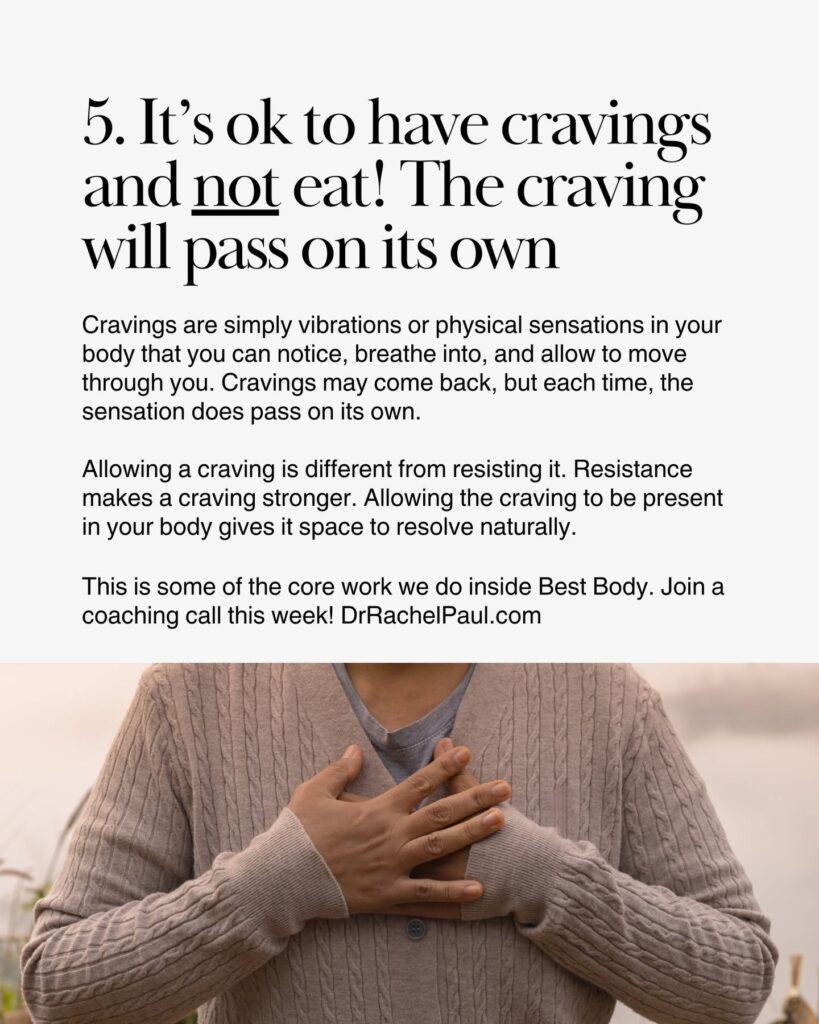
5. Let Cravings Pass Naturally
Not every craving needs to be acted on immediately.
Cravings often rise, peak, and gradually fade over time. Learning to notice a craving without immediately reacting can help you feel more in control of your eating habits.
Instead of fighting the craving, acknowledge it.
Ask yourself:
- Am I physically hungry?
- Would I still want this in 20 minutes?
- What emotion am I feeling right now?
Sometimes you’ll choose to enjoy the food. Other times, you’ll find the craving passes naturally.
Both outcomes are perfectly okay.
What Causes Food Cravings?
Food cravings are not always a sign that your body is missing a vitamin or mineral. Most cravings are influenced by a combination of habits, emotions, environment, stress, and past experiences with certain foods.
Physical hunger can also increase cravings, especially if meals are low in protein, healthy fats, or fiber. Poor sleep, dehydration, and long gaps between meals may also make cravings feel stronger. Understanding your hunger cues can also help you identify whether you’re truly hungry or simply experiencing a craving.
Instead of assuming every craving must be ignored or immediately satisfied, try getting curious about what your body may be telling you. Are you hungry? Bored? Stressed? Tired? Understanding the reason behind a craving can help you choose the response that best supports your goals.
Small Changes Can Help You Eat More Mindfully
Mindless eating at home is incredibly common, but it does not have to hold you back.
Choosing foods you truly enjoy, honoring cravings when appropriate, building balanced meals, staying busy with enjoyable activities, and allowing cravings to come and go are all practical strategies that can make healthy eating feel easier.
Remember, weight loss does not require perfection. Consistent habits that you can maintain are far more powerful than strict rules.