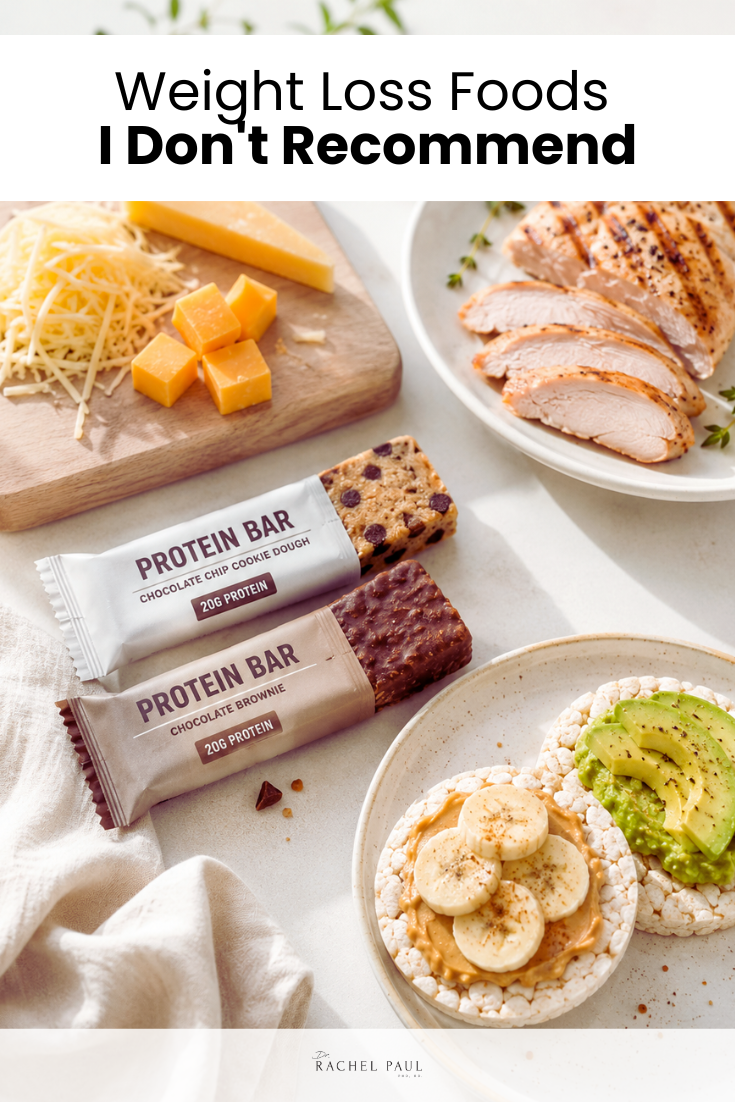
When it comes to weight loss foods, many products are marketed as healthier simply because they contain fewer calories, less fat, or more protein. While those labels may sound appealing, they don’t always tell the whole story. Some of the most popular “diet foods” can actually leave you feeling hungry sooner, making it harder to stay satisfied between meals and stick with your healthy habits.
One of the biggest misconceptions about weight loss is that every meal should be as low in calories or fat as possible. In reality, choosing foods rich in protein, healthy fats, fiber, and other important nutrients often leads to greater satisfaction after eating. When meals are satisfying, you’re less likely to find yourself searching for another snack an hour later.
That doesn’t mean these foods should never be part of your diet. There is room for convenience foods, packaged snacks, and lower-fat options depending on your preferences and goals. The key is understanding which foods work best as everyday staples and which ones are better enjoyed occasionally or paired with more filling ingredients.
Below are six common weight-loss foods I don’t typically recommend as the foundation of a healthy eating pattern, along with simple swaps that can help you feel fuller, enjoy your meals more, and build sustainable eating habits.
6 Common Weight Loss Foods to Rethink
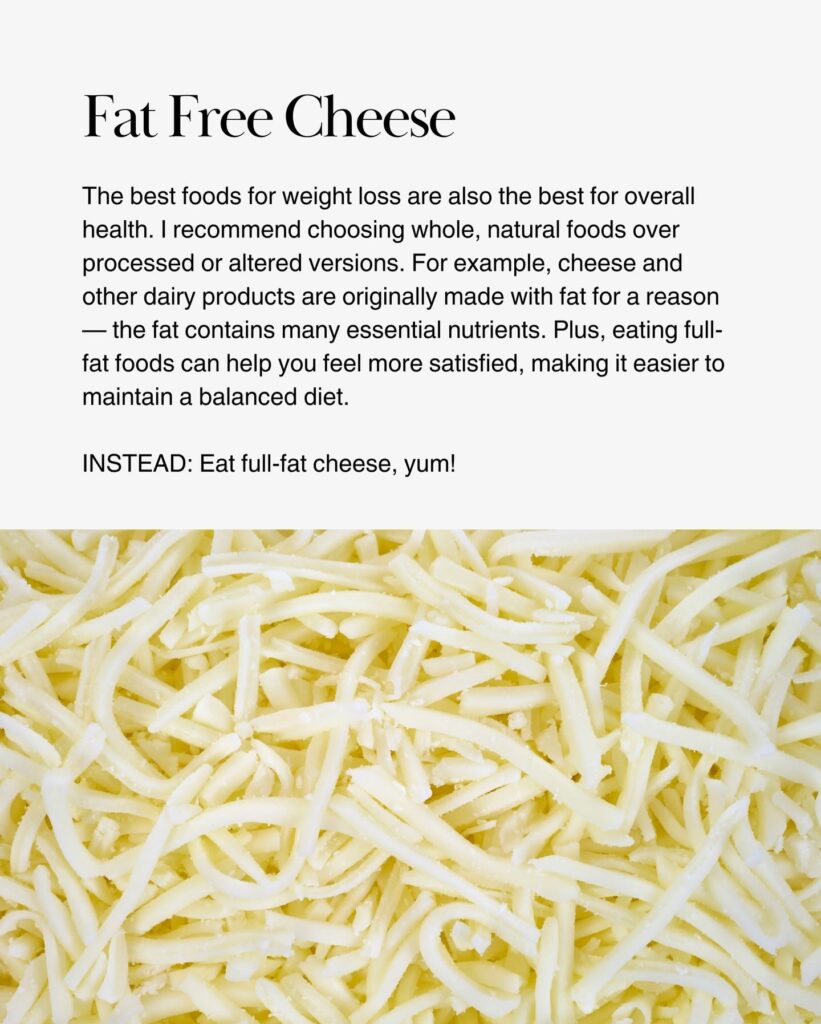
Fat-Free Cheese
Fat-free cheese often sounds like the healthier choice, but removing the fat changes much more than the nutrition label. Fat contributes to the flavor, texture, and satisfaction that make cheese enjoyable. Without it, many fat-free cheeses rely on added ingredients to improve texture, yet still leave you less satisfied.
Healthy fats also help your body absorb fat-soluble vitamins like vitamins A, D, E, and K. While cheese shouldn’t be your only source of these nutrients, enjoying moderate portions of regular cheese can absolutely fit into a balanced weight loss plan. Research also suggests that full-fat dairy can be just as compatible with weight management as reduced-fat dairy when eaten in appropriate portions.
Instead of trying to eliminate fat, focus on reasonable portions. Many people find that one ounce of flavorful cheese is far more satisfying than a larger serving of the fat-free version. Feeling satisfied after meals is one of the most important factors in maintaining healthy eating habits in the long term.
Better choices
- Cheddar cheese
- Serving: 1 oz (28 g)
- Calories: About 110-120
- Fresh mozzarella
- Serving: 1 oz (28 g)
- Calories: About 70-85
- Parmesan
- Serving: 1 tablespoon grated
- Calories: About 20
Simple tip: Pair cheese with fruit, vegetables, eggs, or whole-grain crackers for a balanced snack that keeps you full longer.
Protein Powder
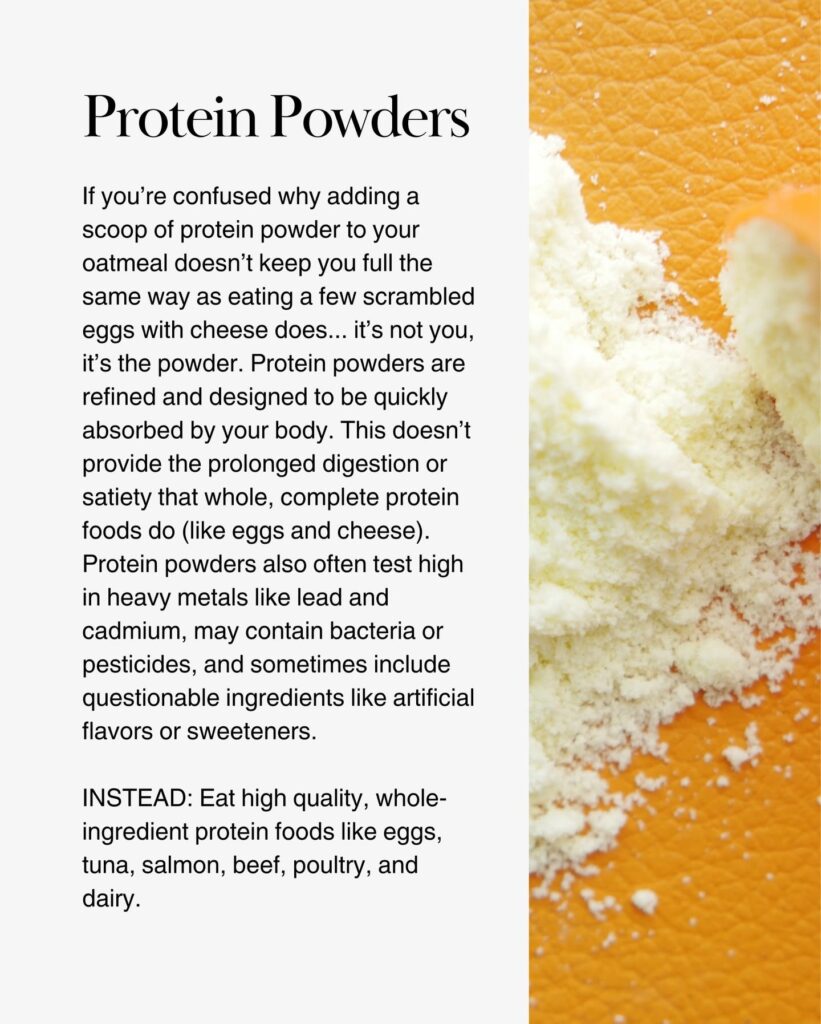
Protein powder can absolutely have a place in a balanced diet, especially after exercise or when life gets busy. However, it shouldn’t automatically replace whole-food protein throughout your day.
Whole foods naturally provide protein alongside vitamins, minerals, healthy fats, and other nutrients that powders simply can’t match. They also require more chewing and generally digest more slowly, which helps many people stay satisfied longer after eating.
Another consideration is quality. Independent testing has found that some protein powders contain measurable amounts of heavy metals such as lead and cadmium, although levels vary widely by brand. Choosing products that undergo third-party testing can help reduce this concern. Even so, whole-food protein remains the gold standard whenever it’s practical.
Rather than thinking of protein powder as your primary source of protein, think of it as a convenience tool. It can help fill nutritional gaps, but it shouldn’t replace balanced meals built around whole foods.
Better choices
- Eggs
- Serving: 2 large
- Calories: About 140
- Plain Greek yogurt
- Serving: ¾ cup
- Calories: About 120
- Cottage cheese
- Serving: ½ cup
- Calories: About 90
- Tuna
- Serving: 3 oz
- Calories: About 100
Simple tip: If you enjoy protein shakes, blend them with fruit, Greek yogurt, or nut butter to create a more balanced meal instead of relying on powder alone.
Protein Bars
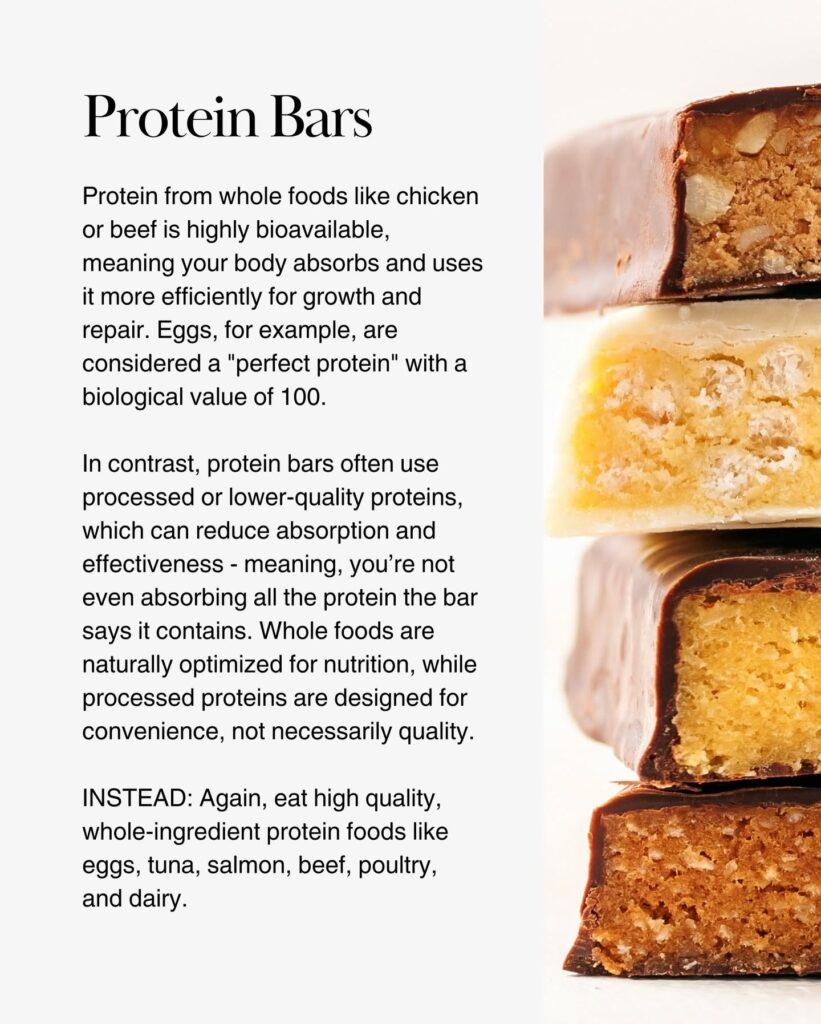
Protein bars are among the most convenient snacks available, but convenience doesn’t always equate to quality. Many bars contain long ingredient lists, sugar alcohols, artificial sweeteners, or highly processed protein isolates that may not be as satisfying as protein from whole foods.
This doesn’t mean you need to avoid protein bars altogether. They can be incredibly helpful while traveling, in your car, or during a busy workday. The key is recognizing when convenience is serving you and when it’s replacing foods that would better support your hunger and nutrition.
Whole-food protein sources generally provide additional vitamins, minerals, healthy fats, and natural textures that help increase satisfaction. Because they’re less processed, they also encourage slower eating, which may help your body recognize fullness.
Better choices
- Hard-boiled eggs
- Serving: 2 eggs
- Calories: About 140
- Plain Greek yogurt
- Serving: ¾ cup
- Calories: About 120
- Cottage cheese with berries
- Serving: ½ cup cottage cheese + ½ cup berries
- Calories: About 130-150
- Beef jerky (lower sodium)
- Serving: 1 oz
- Calories: About 80-100
Simple tip: Keep a protein bar in your purse or gym bag for emergencies, but reach for whole-food protein whenever you have the option.
Low-Protein Frozen Meals
Frozen meals can absolutely fit into a healthy lifestyle. In fact, keeping nutritious frozen meals on hand often makes it easier to avoid expensive takeout or fast food during busy weeks.
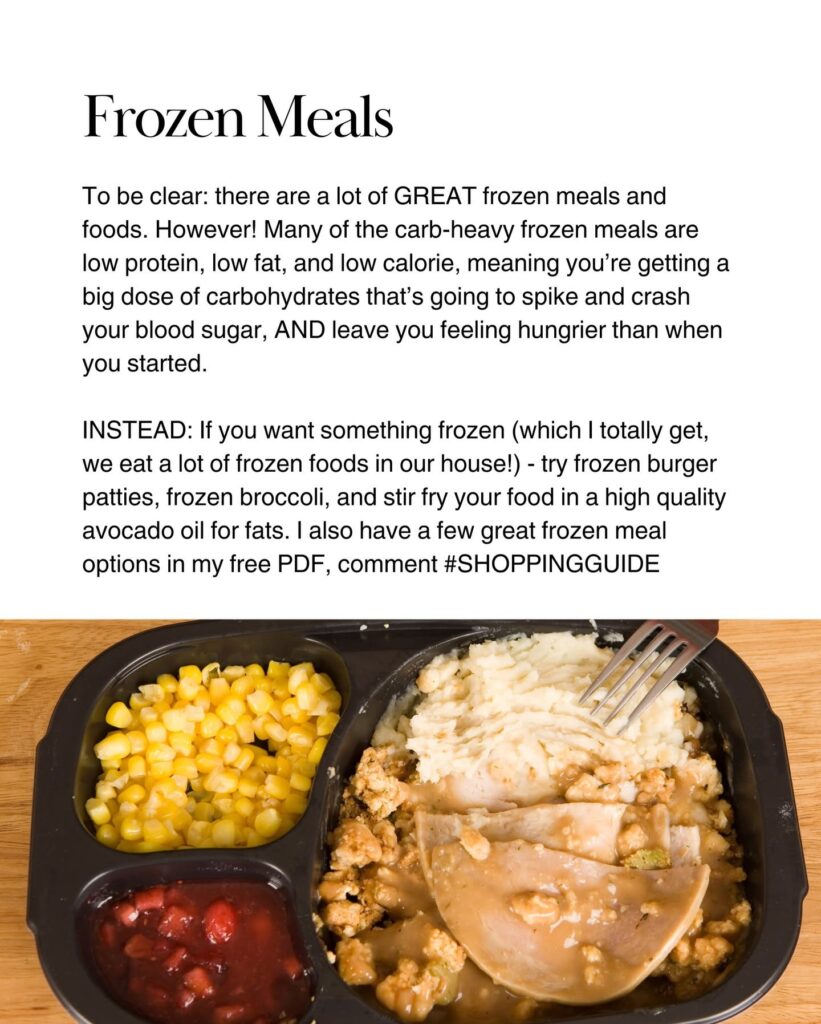
The challenge is that many frozen meals are built around refined carbohydrates while providing only a small amount of protein and vegetables. They may fit your calorie goal, but they often don’t provide enough volume or protein to keep you satisfied for very long.
When shopping, flip the package over and look beyond the calories on the front. Aim for meals that contain around 20 grams or more of protein, include vegetables whenever possible, and provide fiber to help support fullness.
You can also improve almost any frozen meal by adding frozen broccoli, green beans, cauliflower, or another serving of lean protein. A simple upgrade can turn an average frozen dinner into a much more balanced meal.
Better choices
- Frozen grilled chicken with vegetables
- Serving: 1 meal
- Calories: About 350-450
- Frozen salmon with broccoli
- Serving: 1 meal
- Calories: About 350-450
- Turkey burger with frozen vegetables
- Serving: 1 patty plus vegetables
- Calories: About 300
Simple tip: Keep frozen vegetables stocked in your freezer. They’re affordable, nutritious, and easy to add to almost any meal.
Plain Rice Cakes
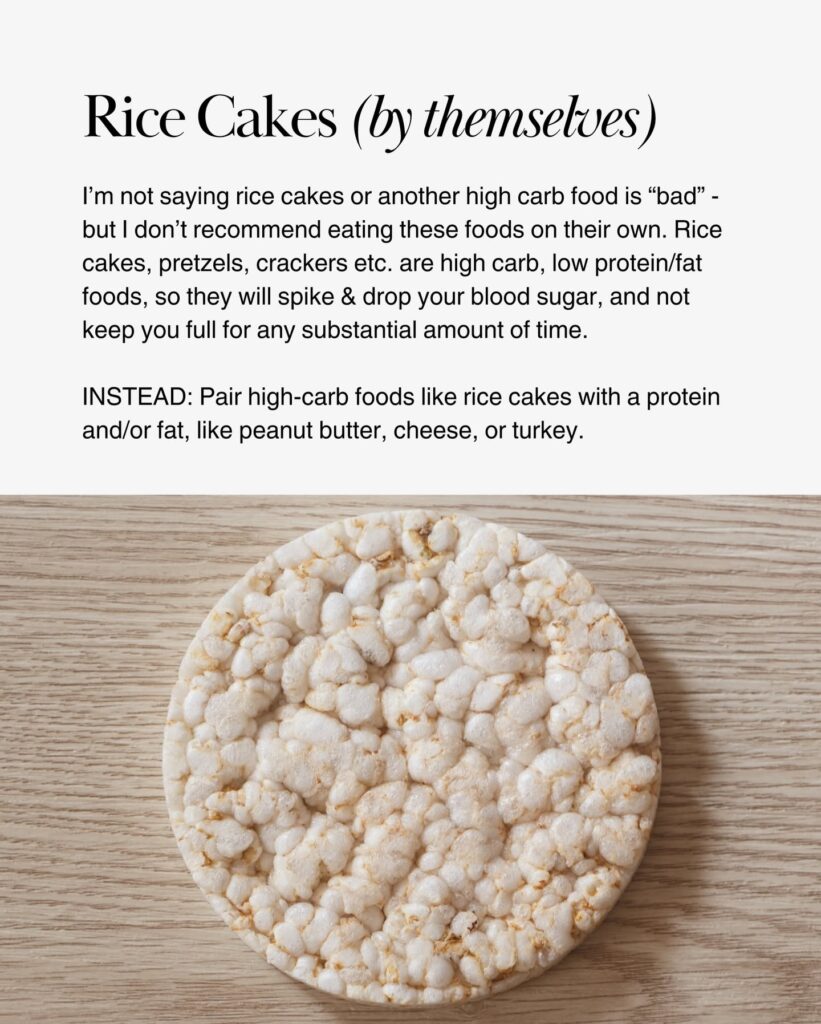
Rice cakes aren’t unhealthy. They’re simply not very filling on their own because they’re primarily made from carbohydrates and contain very little protein or fat.
When carbohydrates are eaten by themselves, they generally digest more quickly. That isn’t necessarily a bad thing, but it can leave you hungry again sooner than you’d like. Pairing carbohydrates with protein, healthy fats, or both helps create a snack that’s more balanced and satisfying.
Rather than crossing rice cakes off your grocery list, think of them as a blank canvas. The toppings you choose determine whether it becomes a balanced snack or one that leaves you searching for more food an hour later.
Better combinations
- Rice cake + peanut butter
- Serving: 1 rice cake + 1 tablespoon peanut butter
- Calories: About 130
- Rice cake + cottage cheese
- Serving: 1 rice cake + ¼ cup cottage cheese
- Calories: About 90
- Rice cake + turkey slices
- Serving: 1 rice cake + 2 oz turkey
- Calories: About 100
Simple tip: Whenever you eat a carbohydrate-rich snack, ask yourself what protein or healthy fat you can add alongside it.
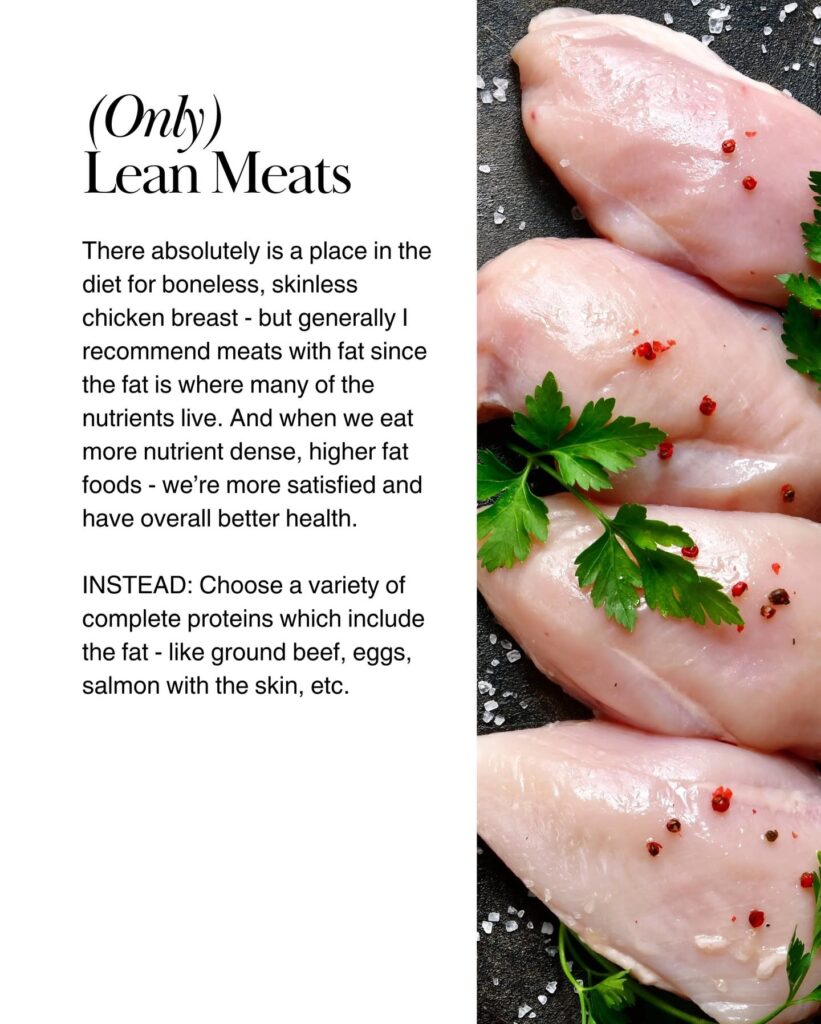
Only Eating Lean Meats
Lean meats absolutely deserve a place in a healthy eating pattern, but they don’t need to be your only source of protein. Many people trying to lose weight avoid foods like salmon, eggs, or lean ground beef simply because they naturally contain more fat.
The reality is that these foods also provide valuable nutrients. Salmon is rich in omega-3 fatty acids. Eggs supply choline along with several vitamins and minerals. Lean beef provides iron, zinc, and vitamin B12. These naturally occurring fats also contribute to greater satisfaction after meals.
Rather than trying to remove every gram of fat from your plate, aim for variety. Rotating different protein sources throughout the week helps you benefit from the unique nutrients each one provides while making meals more enjoyable.
Better choices
- Salmon
- Serving: 3 oz cooked
- Calories: About 180
- Eggs
- Serving: 2 large
- Calories: About 140
- 90% lean ground beef
- Serving: 4 oz cooked
- Calories: About 200
- Chicken thighs
- Serving: 4 oz cooked
- Calories: About 210
Simple tip: Instead of eating chicken breast every day, rotate seafood, eggs, poultry, and lean red meat throughout the week.
Why Less Processed Foods Keep You Fuller
One reason minimally processed foods often support weight loss is that they naturally package several important nutrients together. Protein helps preserve muscle and promotes fullness. Healthy fats slow digestion and improve satisfaction. Fiber supports digestive health and helps meals feel more substantial.
Many highly processed foods isolate just one of those nutrients. A product may be high in protein but contain very little fiber or healthy fat. Another may be low in calories but not satisfying enough to carry you to your next meal. That’s why focusing only on calories or grams of protein can sometimes be misleading.
This doesn’t mean processed foods need to disappear from your diet. Frozen vegetables, canned beans, plain Greek yogurt, frozen fruit, and many packaged foods can absolutely support a healthy eating pattern. Instead of asking whether a food is processed, ask whether it helps you build a balanced, satisfying meal that fits your lifestyle.
Quality Foods Make Weight Loss Easier
Successful weight loss isn’t about finding the lowest-calorie version of every food. It’s about choosing meals that satisfy your hunger, provide quality nutrition, and make consistency easier over time.
Small upgrades, like choosing regular cheese instead of fat-free, pairing rice cakes with protein, or building meals around whole-food proteins, can make a meaningful difference in how satisfied you feel after eating. Those small improvements often add up to healthier habits that are much easier to maintain than restrictive dieting.
Remember, there is no perfect food and no single ingredient that determines whether you’ll lose weight. What matters most is your overall eating pattern and your choice of foods that help you feel energized, nourished, and satisfied.
If you’re looking for realistic grocery recommendations, download my Free Product Recommendations Shopping Guide. It’s filled with practical products that make healthy eating easier without overcomplicating your shopping trip.
For more realistic weight loss tips, recipes, and nutrition resources, visit DrRachelPaul.com.